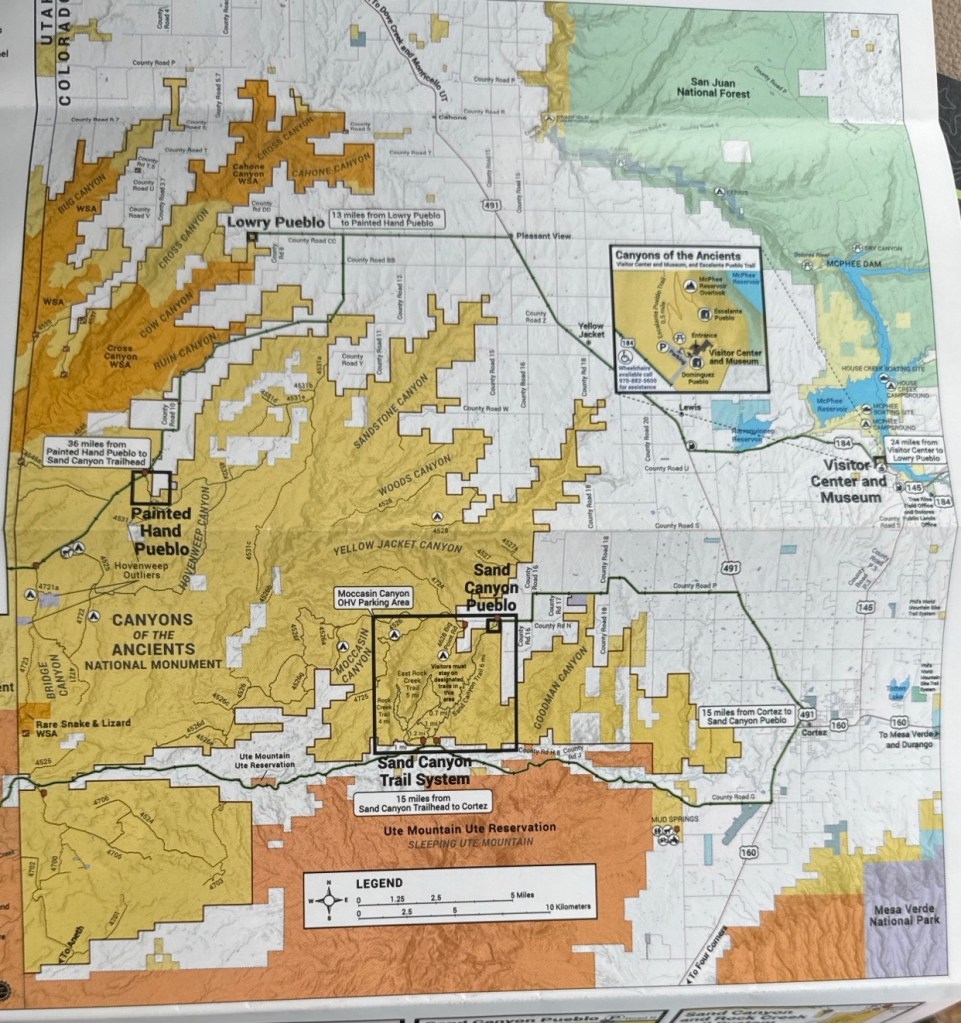
Thursday we spent time at a National Monument close by. We had the opportunity to see more about the Ancestral Puebloans. The Monument is located on the Great Sage Plain, an expansive, dry plateau with lots of canyons throughout. It contains the highest recorded density of prehistoric and historic sites in N. America. Thousands of sites have been recorded with thousands more to be found. Throughout the Monument are 5 pueblos, two at the visitor centre.
Map of the Monument.
At the visitor centre is an amazing museum. Our National Parks pass gave us free admission to the museum. There was a timeline of the various times of the Puebloans and the differences between them. There were also great displays of clothing, jewellery, cooking and storing pots and even their weapons. Explanations were included as well as information about how artifacts were found. They had also reconstructed a pit house inside the museum.
Some of the artifacts in the museum
After watching a film at the visitor centre we headed out to one of the Ancestral Puebloan villages, about 40 km away. The film included information about how to respect the land we were going to see. It also talked about how the ideas relating to understanding the Ancestral Puebloans had changed over the last 20 years or so. Much of the history of the indigenous people is carried from generation to generation through oral history. Because of this, archeologists and researchers are involving current day Puebloans in their studies.
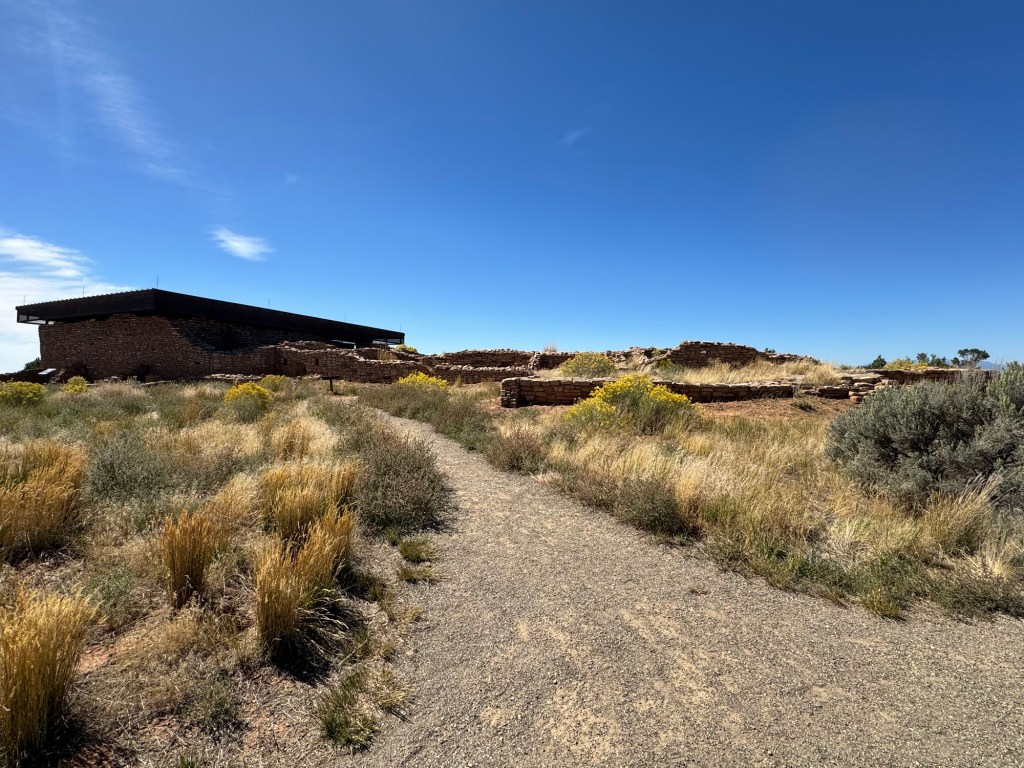
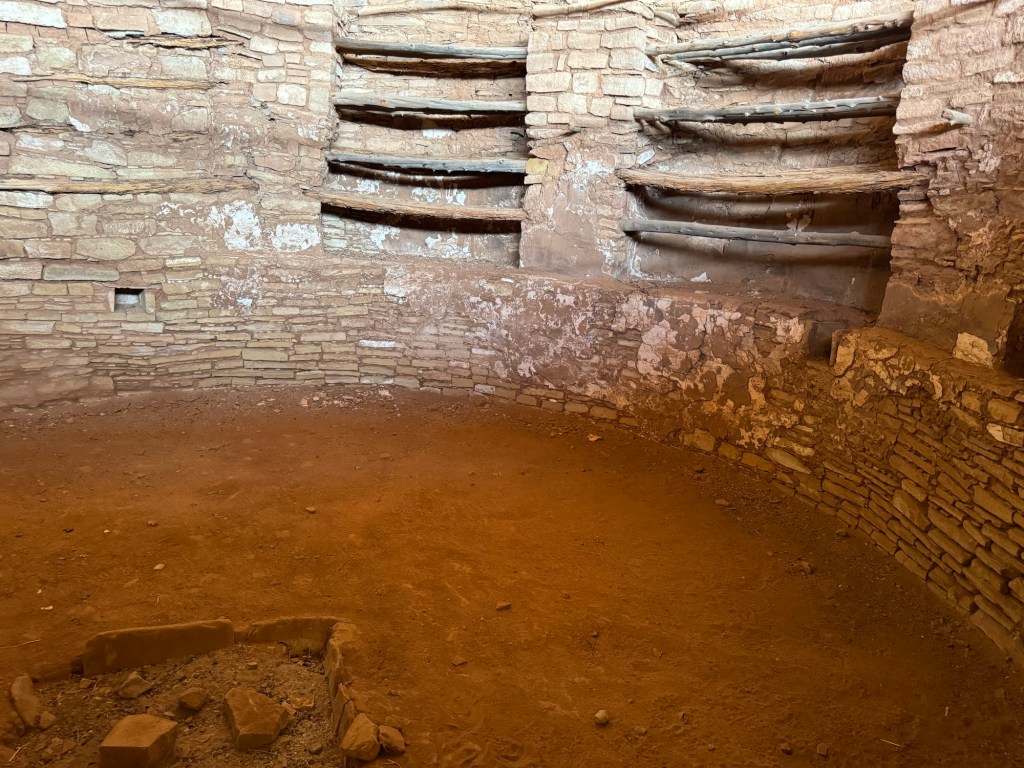
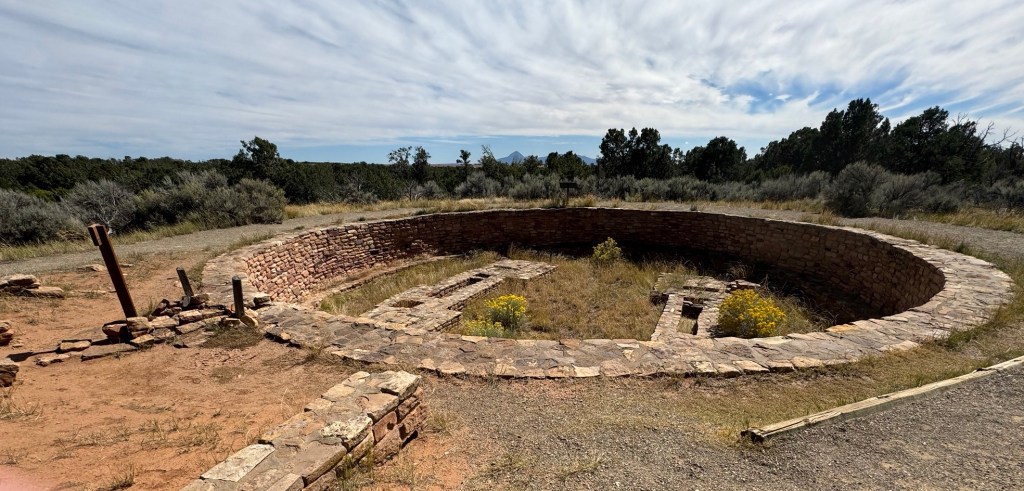
Lowry Pueblo is an Ancient Puebloan village from about 1000 years ago. It was inhabited for about 165 years. By the time it was finished, it included 40 rooms, 8 kivas. and a Great Kiva.
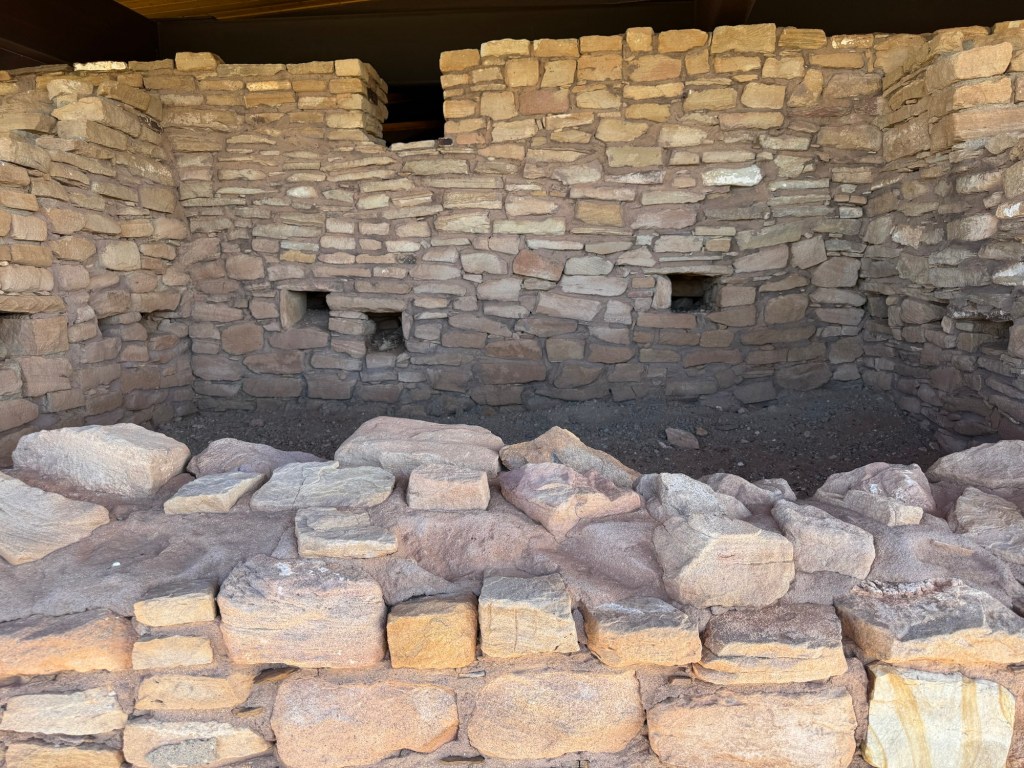
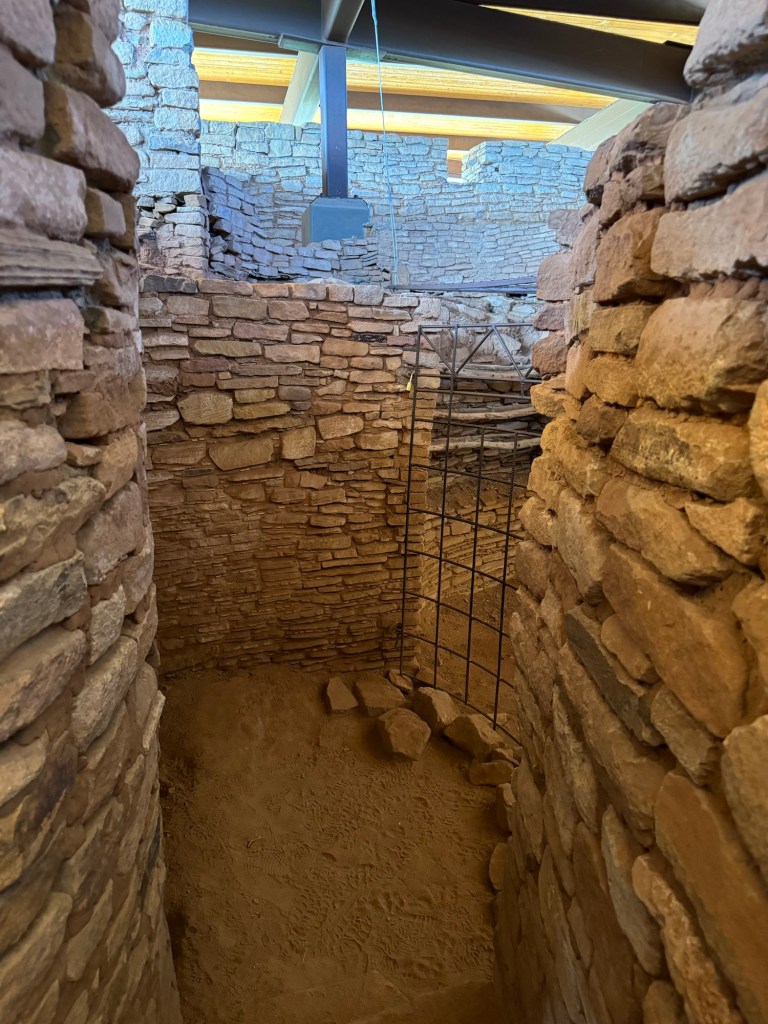
Lowry Pueblo – a roof has been added to help stabilize the structure. It was thought to be 2-3 stories highInside the PuebloOne of the kivas inside the Pueblo
This was the only pueblo we were able to go into and it was only a very small area.
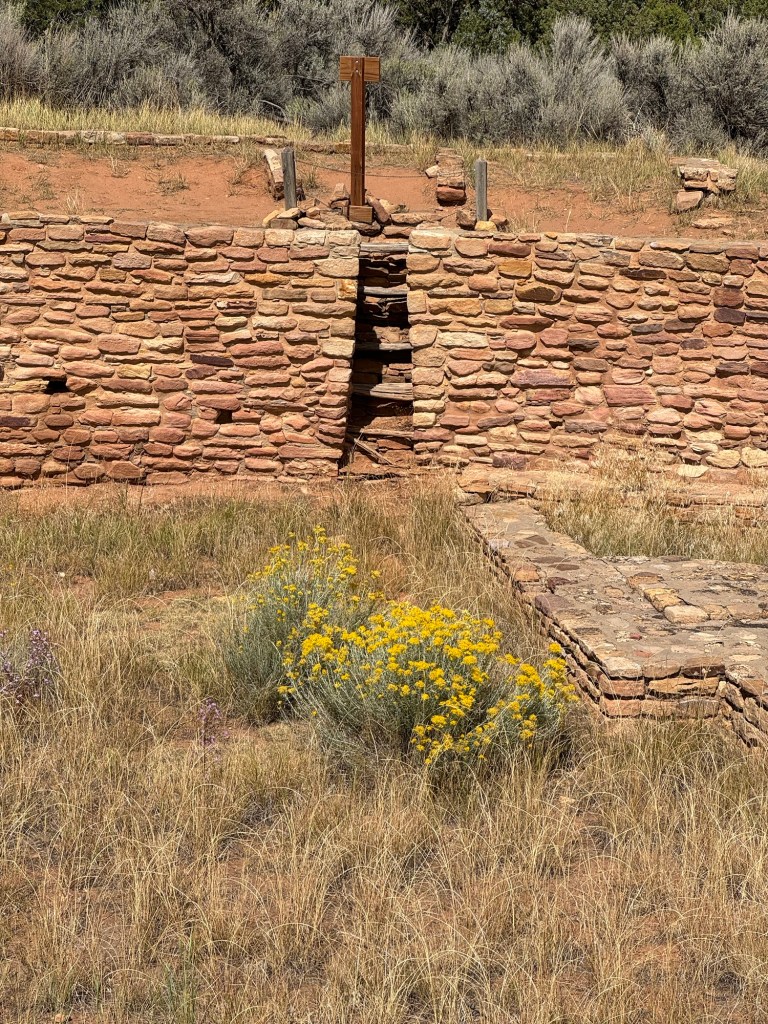
Great KivaEntrance in
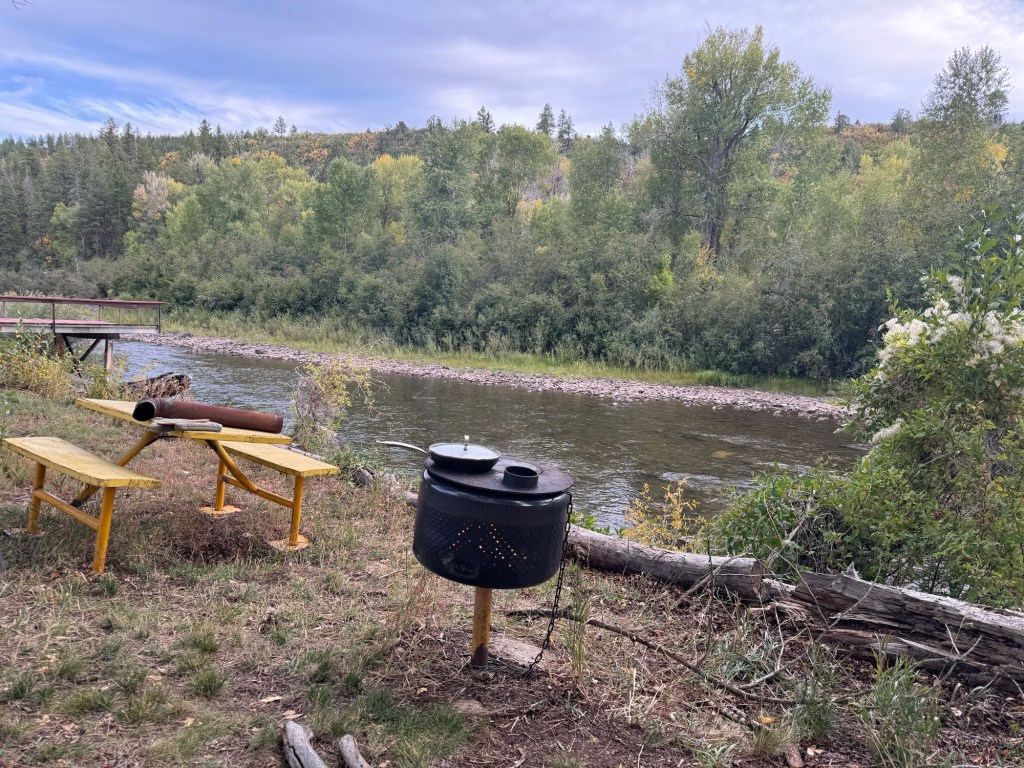
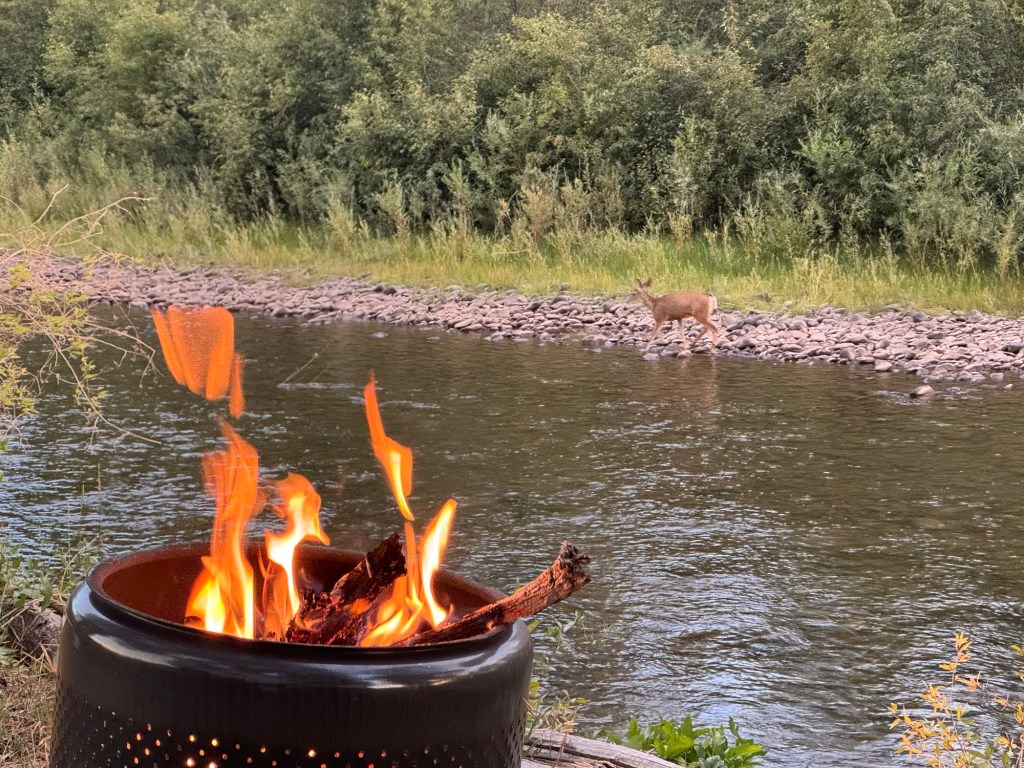
By this time it was mid afternoon and we decided to head back to the trailer to enjoy our quiet campsite. It was nice sitting out by the river. Paul started a campfire and we decided to make supper outside too!
Modelled after an old fashioned wood stove top
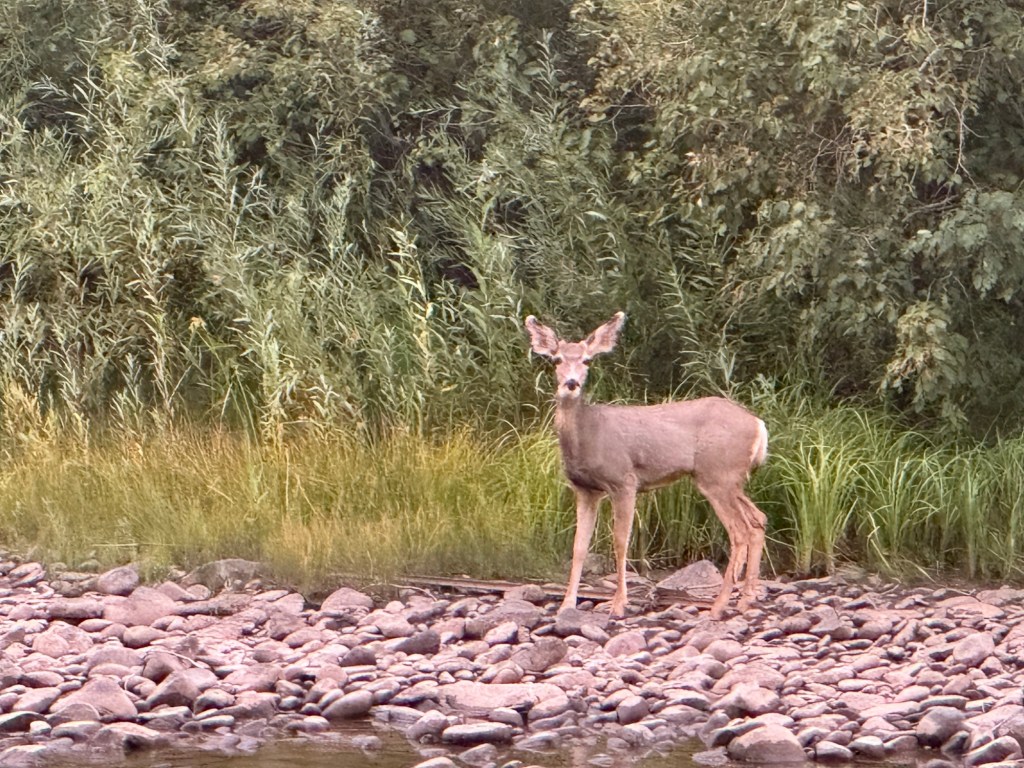
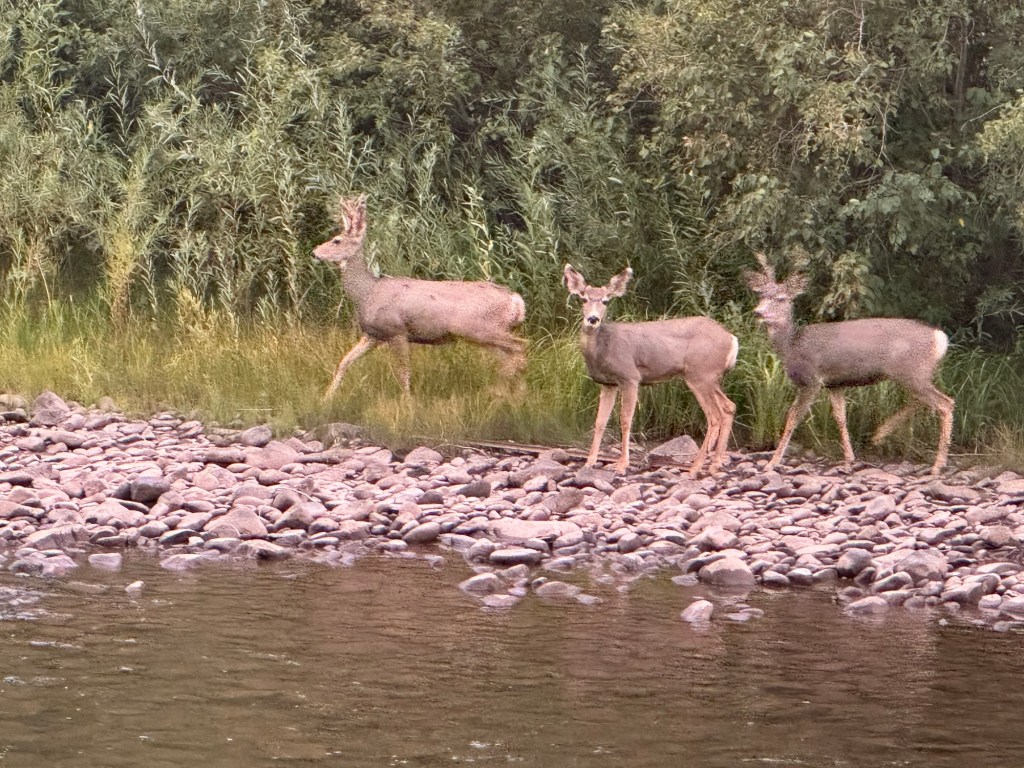
While we were out, we were visited by 4 deer.
We were treated to a beautiful sunset to finish off the day. Tomorrow we move on.
Yesterday (Tuesday) was a travel day. We started out the morning with blue skies and sun but by the time we had eaten, packed up and dumped the tanks it had clouded over and we could see dark skies in the direction we were heading.
We were travelling back towards Telluride and south on Hwy 145. While we did have a mountain pass to go through, the road was much better for travelling than the Million Dollar Highway! We did experience not only some heavy rain (probably the most we’ve had this trip), but also less than a minute of hail. At one point it looked like they had actually had a bit of snow that we could see along the edge of the road.
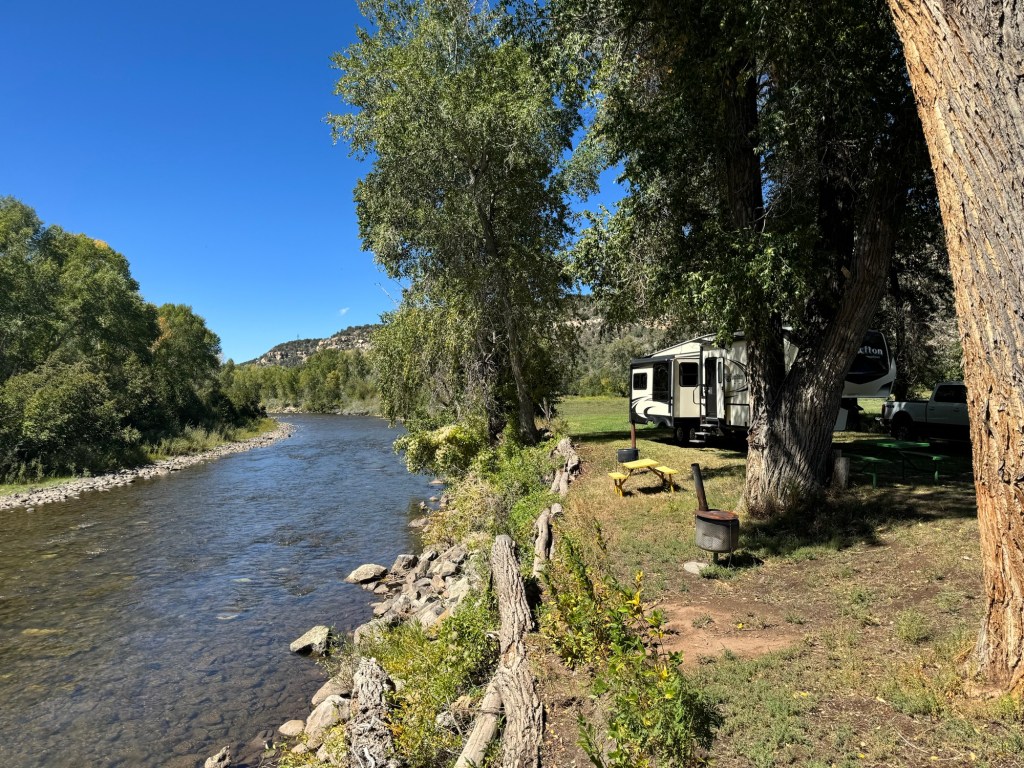
Finally we got out of the rain and started looking for our campsite for the night. We had reserved at a private campground with only 5 sites. It was on a private farm with no hookups but right along the river. They had no other campers so we have the place to ourselves. The farm house and barn are across the highway. We pulled into the lane towards the campground and went to look things over. Then a woman came from the farm driving her four-wheeler. She introduced herself as Jeanie. She said her husband is 95 and she is 88. This is the farm he was raised on and lived on all his life. She sure gets around for her age!
Along the River RV Campground Site 2
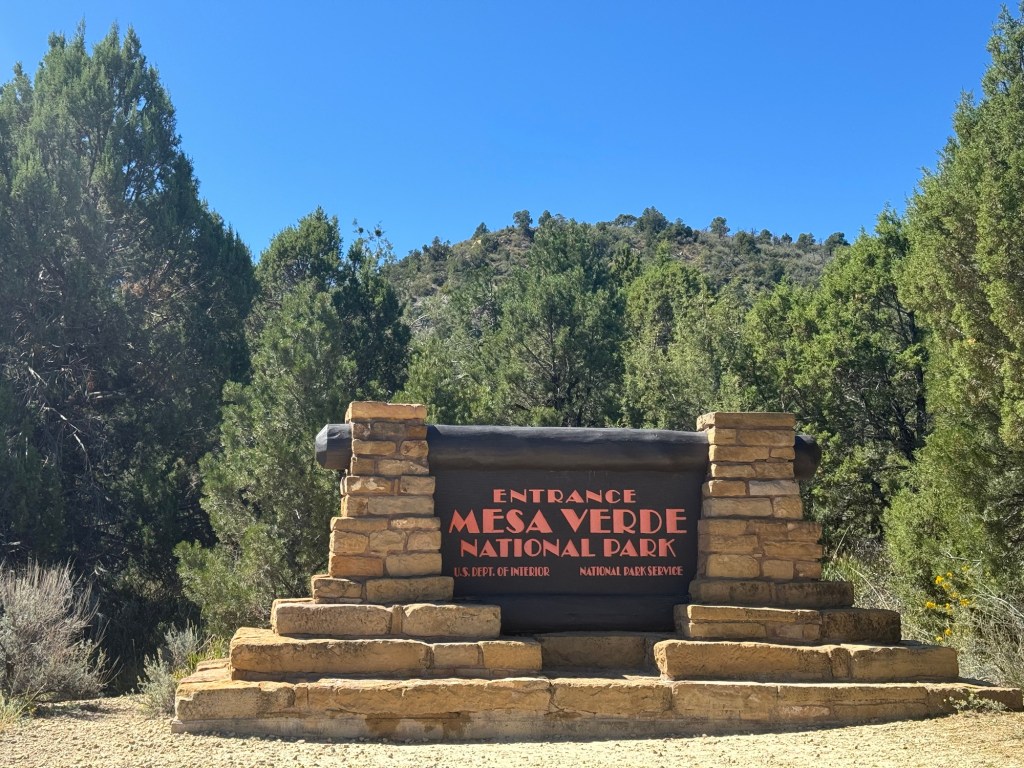
This morning our trip takes us to another national park. Mesa Verde was established on 1906 as the only national park created to preserve Ancestral Pueblo culture and prehistoric architecture. These people made their home for over 750 yrs from AD. 550 to AD. 1300.
Throughout the park there are nearly 5000 known archeological sites. There are 3 different periods of inhabitants. The first started farming and basket weaving living in pit structures. The middle had deeper structures or kivas like we saw at Chimney Rock. The final period they began to inhabit the sandstone alcoves in cliff dwellings. Nearly 600 cliff dwellings have been recorded.
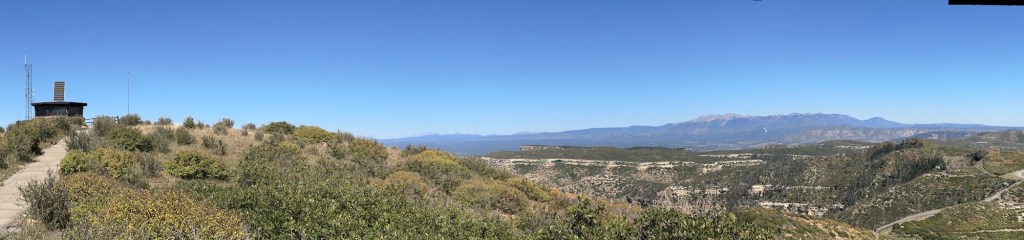
Mesa Verde has been home to many fires over the last years. From Park Point Fire Tower, at an elevation of 8572’, park staff monitored for forest fires. From here, they had a 360 degree view of the park and surrounding area including the Four Corners where Colorado, New Mexico, Arizona and Utah states meet.
Our next stop was at the museum where there were multiple exhibits of artifacts that have been found over the years in the park. Different periods of clay pots, baskets, tools, and food including beans and corn are shown along with lots of information about them.
Measuring 22 qts, this pottery vessel of corn was found hidden in a cave, preserved from rodents
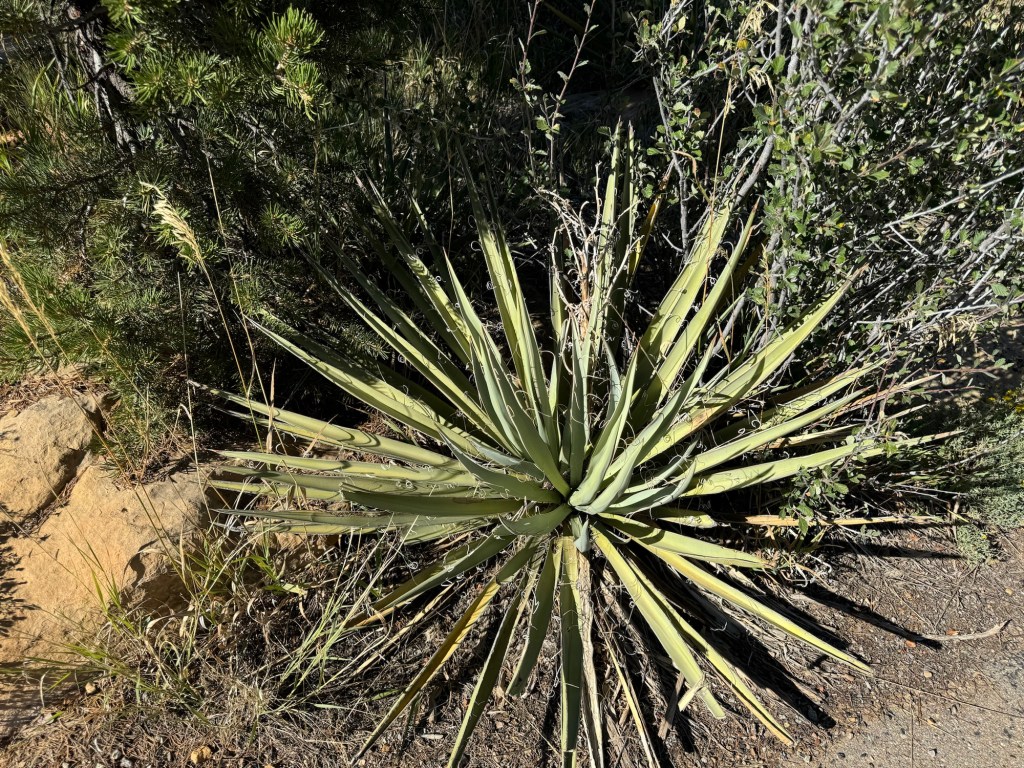
The yucca plant provided much of the material for ropes and cords.
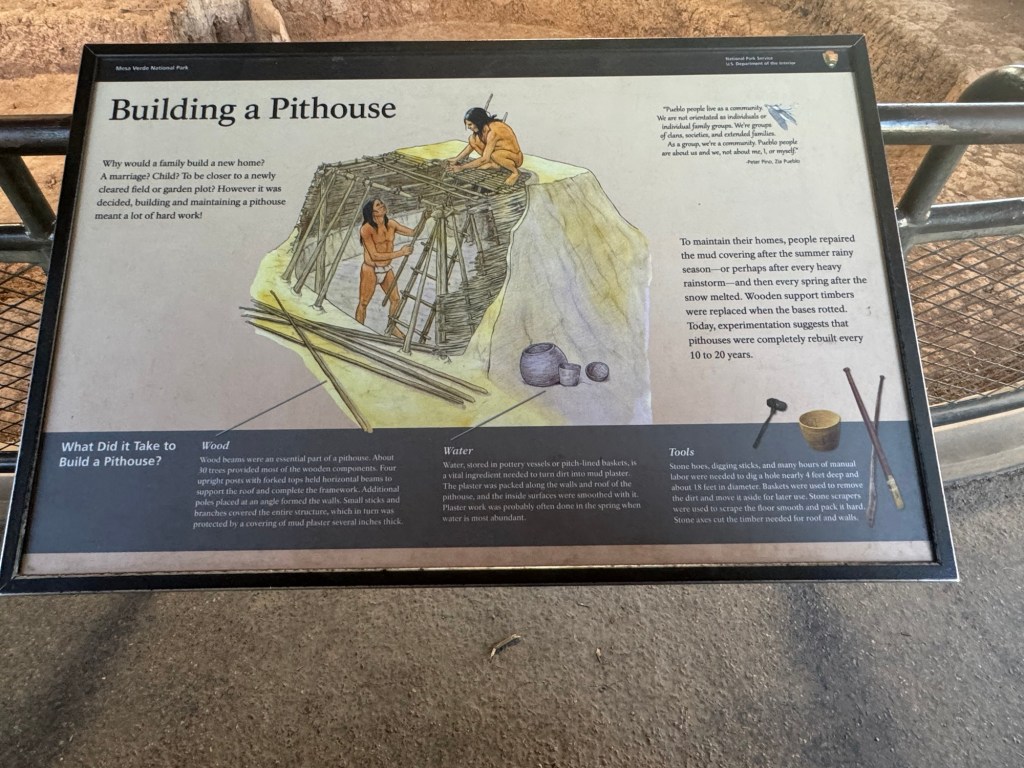
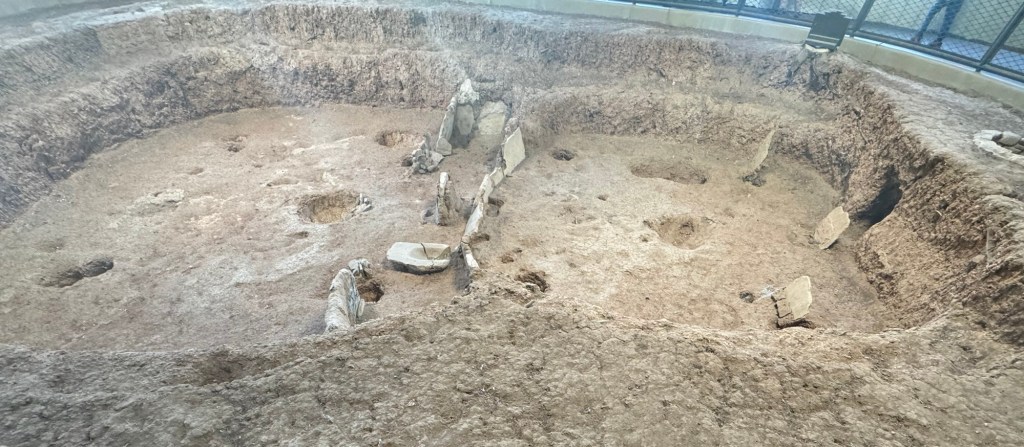
At several spots along the Mesa Top Loop were some examples of the pit houses. This was from the time period around AD. 600 and are the oldest structures here.
Two pit houses – the second built upon the to of the antechamber of the first
The next time period saw kivas, closer to 950 AD. They had more stone walls with a lattice like wooden roof.
Excavated kiva
The final era was the cliff dwellers around AD. 1200.We were able to see quite a few of these dwellings. There are some Ranger-led hikes into them but they are booked in advance and may involve ladders or small spaces – not for Joyce!
Spruce Tree HouseCliff House largest cliff dwelling in N. America – 150 rooms and 21 kivas. Oak Tree House
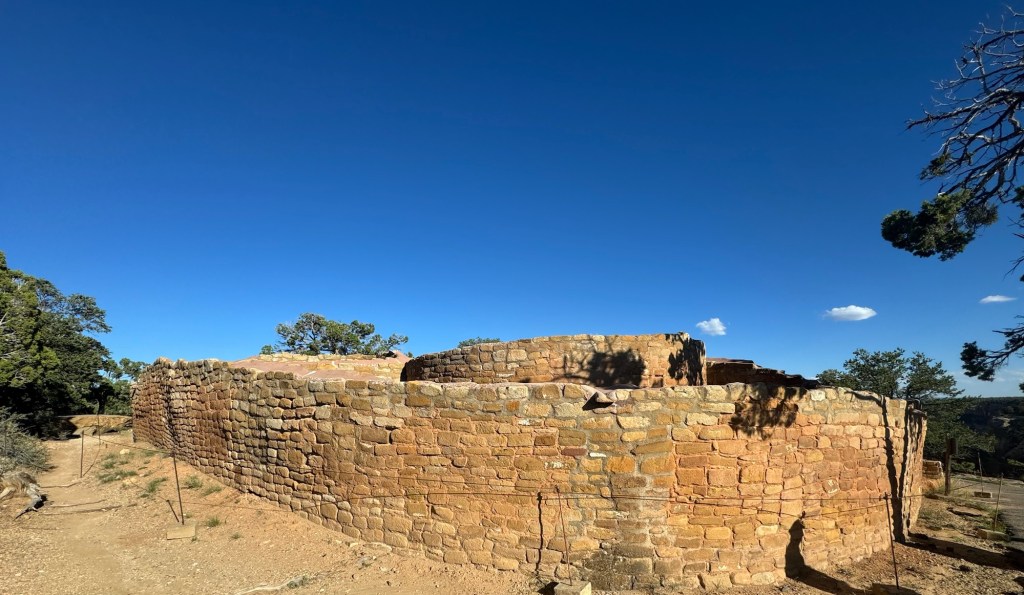
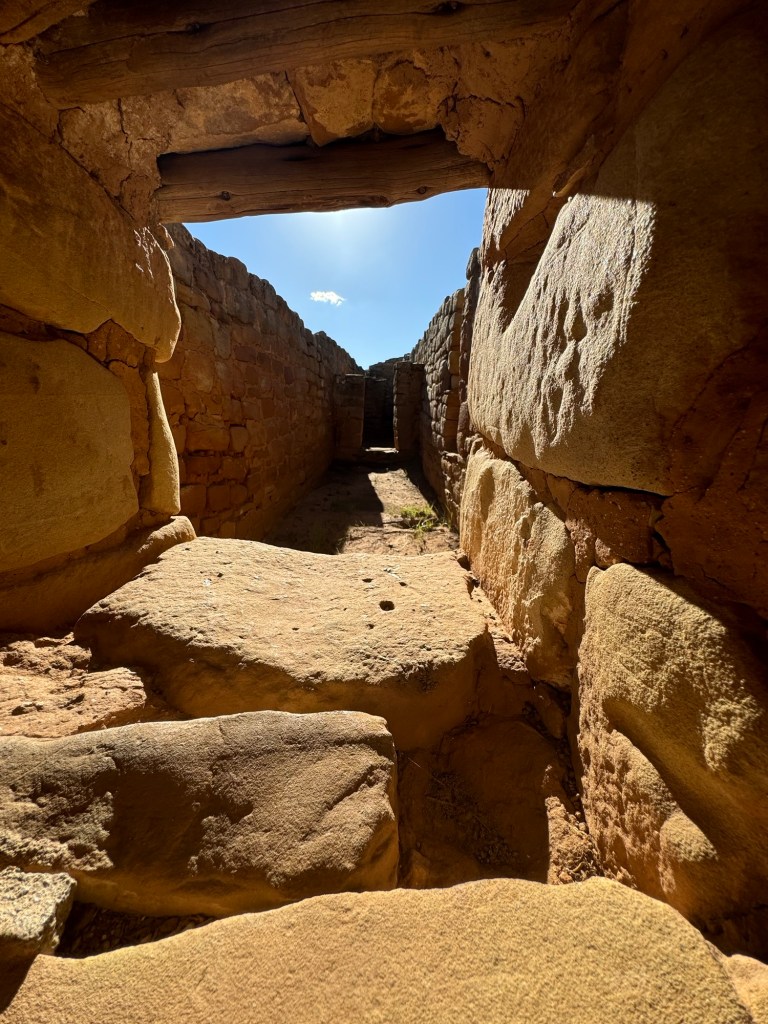
Our final stop of the day was at the Sun Temple. Built above ground in about AD. 1250, with 4’ thick walls, it was likely a communal gathering place. Archeologists excavated 24 rooms of various sizes as well as 3 circular structures inside and one circular structure outside. There were no roof beams or household goods found in it.
Outside walls of the Sun Temple Looking into some rooms through an opening in the wall.
We saw a lot at Mesa Verde without having to do a lot of hiking. We didn’t get to one small loop of the Mesa Top Loop and the complete Wetherill Mesa was closed due to construction. However we had a perfect day for weather and we learned a lot about the Ancestral Puebloans.







 Following Joyce & Paul's Travels in Retirement