Blog

Featured

We now have a departure date!

So, after all the anticipation of our trip, we plan on leaving tomorrow! August 1st we’ll be on the road, heading for family connections in Nebraska. We have solar on the roof of the trailer now and the sun is working its magic. We were able to run the fridge using our captured solar power and even run the hair dryer! It’s exciting to see it in operation after the last month of Paul’s hard work. We’re looking forward to trying more extended boondocking and being able to camp in more national parks and forests that often don’t have electric hookups. We also hope to try some stops on public lands as well.

A new experience

Friday we arrived in Guatemala at 9 am. We had an 8 hr excursion booked from where we docked over to Antigua and back.

The usual drive is about 90 minutes but there is a lot of construction right now and we were warned it might be closer to 2.5 hrs. and it was !

We drove through a lot of agricultural areas. It is the dry season now. They really only have two seasons, wet and dry. There are some very poor areas here. Lots of poverty.

We also saw one of the active volcanoes as we drove across the country.

Fuego volcano – it does have an eruption daily.
The town of San Miguel Los Logos was wiped out 2018 due to the last major eruption of Fuego volcano – 200 people killed – it still erupts daily.

We transferred to smaller coaches to get into the main part of the city.  Antiqua is a UNESCO World Heritage site, recognized for its cultural value and colonial buildings. The streets are all cobblestones and required really paying attention to where we walked.

Our first stop after getting onto the smaller coaches was this ornate church. Unfortunately the church is closed in mid day for siesta so we couldn’t go inside. Iglesia de la Merced in Antigua Guatemala, was originally built in the 16th century and rebuilt after earthquakes in 1717 and 1773.

Attached to the church is the remains of a monastery which housed about 100 monks.

Most places in Antigua do not have safe drinking water. Instead they use a portable filter system like this which is affordable and safe. The filtering unit, known as Ecofiltro, is produced from 3 natural materials, clay, sawdust and colloidal silver. These materials work together to clean bacteria and micro-organisms.

From the church, we walked a couple of blocks to what the locals call “Central Park”.

Parque Central is a historic plaza surrounded by colonial architecture like the Cathedral and City Hall, featuring the iconic Fountain of the Sirens. It’s a lively hub for locals and tourists, filled with vendors, marimba music, and daily life, offering a central spot to experience the city’s culture, history, and stunning volcano view. The white building is the Cathedral de San José, rebuilt for the third time after the earthquake of 1773.

Following our walk through the park, we had a 6 block walk to our lunch stop, the Santo Domingo Hotel. By this time we were ready to eat! It was after 2 pm.

The grounds were beautiful and well maintained.
A beautiful setup for a wedding.
A Ceiba Tree, Guatemala’s National Tree. It can reach heights up to 60 m.

We ate a lunch of tortillas, chicken, veal, black beans, guacamole, cheese, fried bananas and a fried dough dessert called Buñuelos which is served with a sweet thin syrup.

After lunch we had a quick walk over to the jade museum. Mary Lou and Jay Ridinger came to Guatemala in 1974 to solve an archaeological problem.  What became of the ancient sources of jade that had been used by the Mayas and six other ancient civilizations for three thousand years?  (between 1500 B.C. and 1500 A.D.)  They rediscovered the sources along the tectonic plate boundary that runs east-west through central Guatemala in 1974. They sent samples to the Gemological Institute of America to be tested and found that they had discovered Jadeite jade, the more valuable and rarer type of jade found on the planet. Their company, Jade Maya, made the decision to re-establish a jade carving industry in Guatemala and opened its doors in the 1970’s and remains the largest jade operation in Central and South America.

The jade is cut and polished in our factory by native Guatemalan workers who are recovering and preserving the carving traditions of their ancestors. The raw jade is transformed into pre-Columbian style museum quality replicas and exquisite handmade unique fine fashion jewelry.
The museum’s founder said this piece is their retirement money!

Our large bus picked us up at the Jade Museum so we could start the long trek back to the ship. The weather wasn’t as nice by then, more ash and cloud had fallen and it was getting closer to sunset so the lighting wasn’t very nice for pictures.

We were later than planned arriving back, due to the traffic, but since it was an organized tour by Cunard, we didn’t have to worry about – the ship simply waited for all the buses

so we ended up leaving port about 90 minutes late!

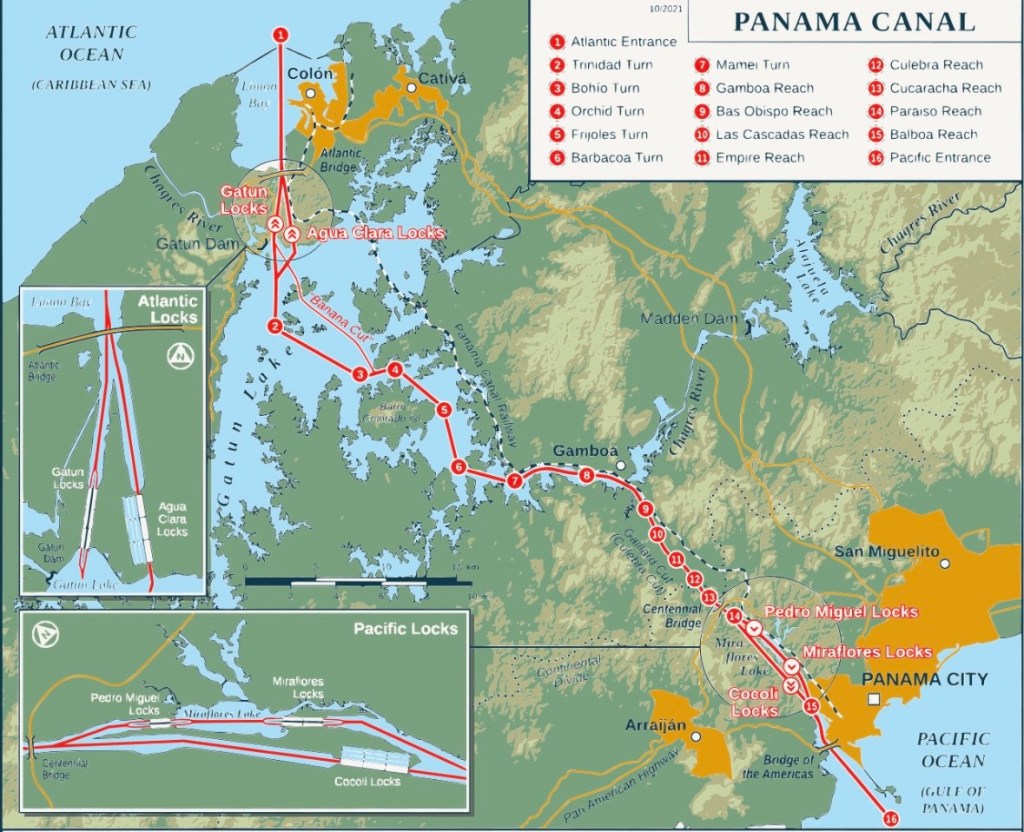
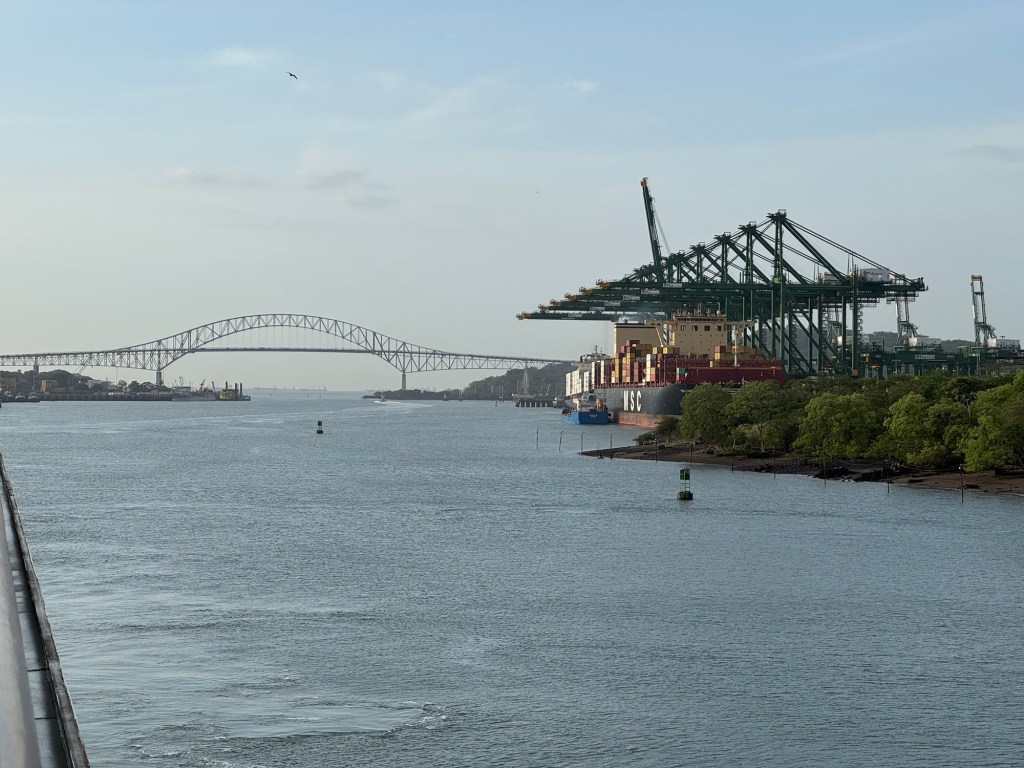
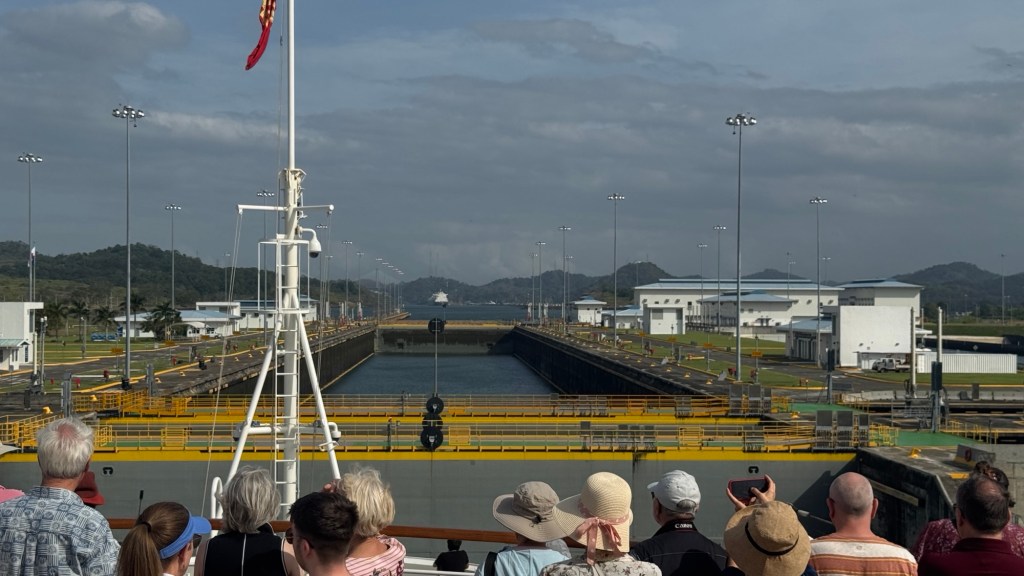
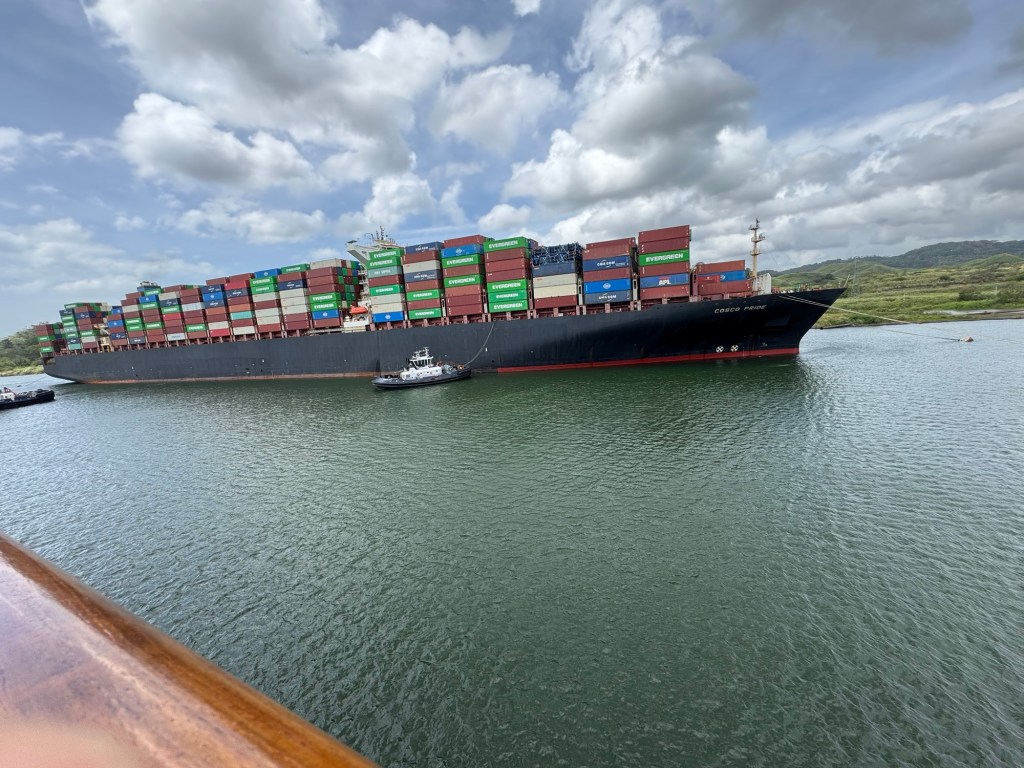
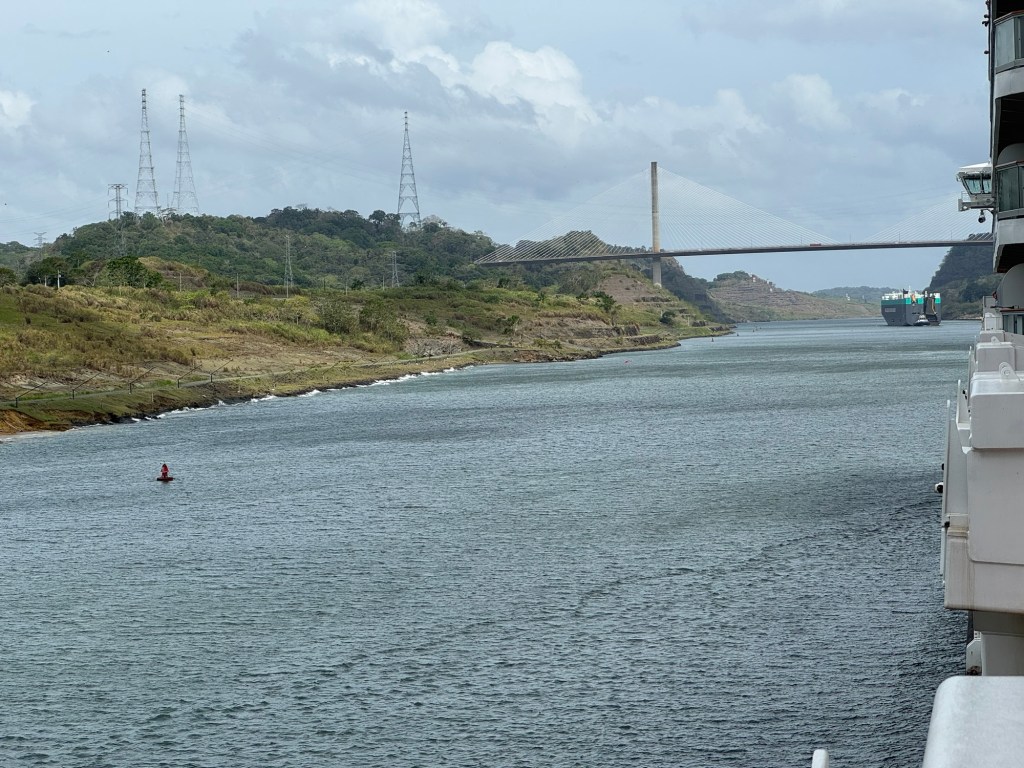
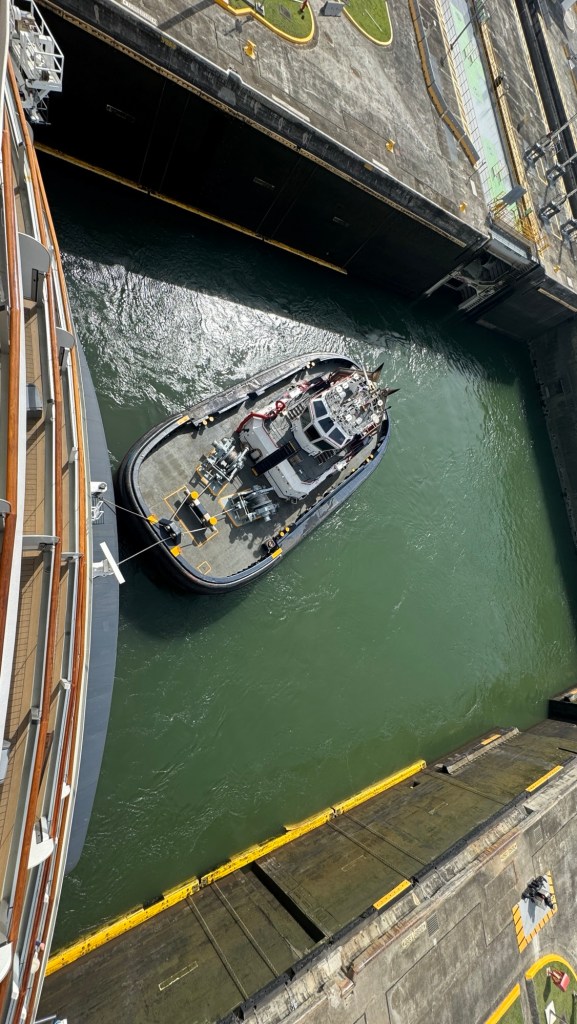
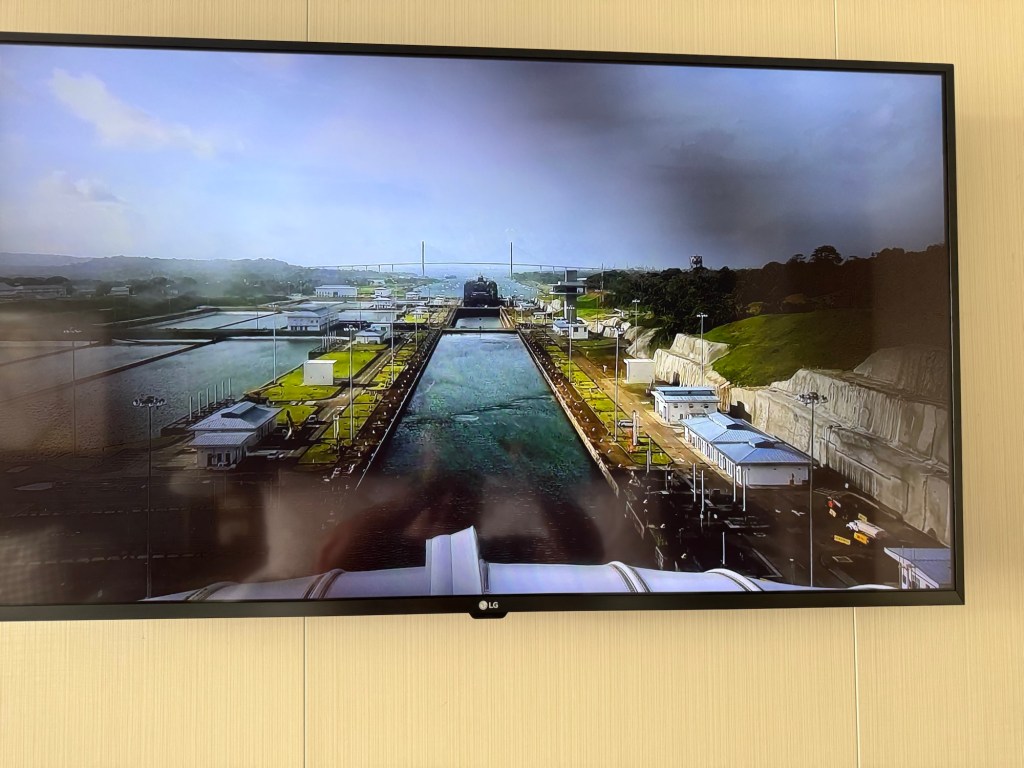
Now we have several days at sea including passage through the Panama Canal until we reach Curaçao on Wednesday. It’s been warm since we left LA as we’ve headed closer to the equator again.

Hollywood

As we were in port at Hawaii, we had an indigenous group come on board and give us a wonderful performance. Some of the girls performing didn’t look to be any older than maybe 10! They were right in step!

Hawaiian dancers

Easter weekend was spent in Los Angeles. Our first day we took a half day tour from the ship to see the sights of LA.

Our tour guide tried to pack as much in as possible, to the detriment of the poor bus driver. She was constantly trying to redirect him – she knew a shortcut or she wanted to add something into the tour “while we were here”. Being Easter weekend there was also a lot more traffic and people walking than usual. We saw lots of interesting buildings in the core downtown.

Then we arrived at the Walk of Fame where the bus let us off to take a walk along Hollywood Blvd. If you are successful in getting your star, it only costs $85,000 which includes ongoing maintenance!

The Hollywood Walk of Fame is a historic landmark in Los Angeles featuring over 2,800 terrazzo and brass stars embedded in sidewalks along Hollywood Boulevard and Vine Street, honoring achievements in the entertainment industry like film, television, radio, and music. Conceived in the 1950s by the Hollywood Chamber of Commerce, it officially debuted in 1960.

We also saw the iconic Dolby Theatre where the Academy Awards have been held in recent years.

And of course, we had a good view from the mall of the Hollywood sign on the hill.

Back on the ship, we walked by an Easter display- you could smell it before you could see it!

Can’t imagine how much chocolate was needed for the display or how long an egg takes to make and decorate.

We have 4 days of “at sea” until we arrive at our next stop, Puerto Quentzal in Guatemala. We managed to capture one sunset on board.

See you in a few days!