
So, on Sunday we drove the short distance to the North Unit of Theodore Roosevelt National Park. It was just over an hour north of where we were camping but since we were headed further north after our stopover, it made sense to move the trailer north instead of just making a day trip. Once again we chose a National Grasslands campground. This one was completely open with minimal trees, but we decided that was good since we wanted maximum solar to recharge the batteries.
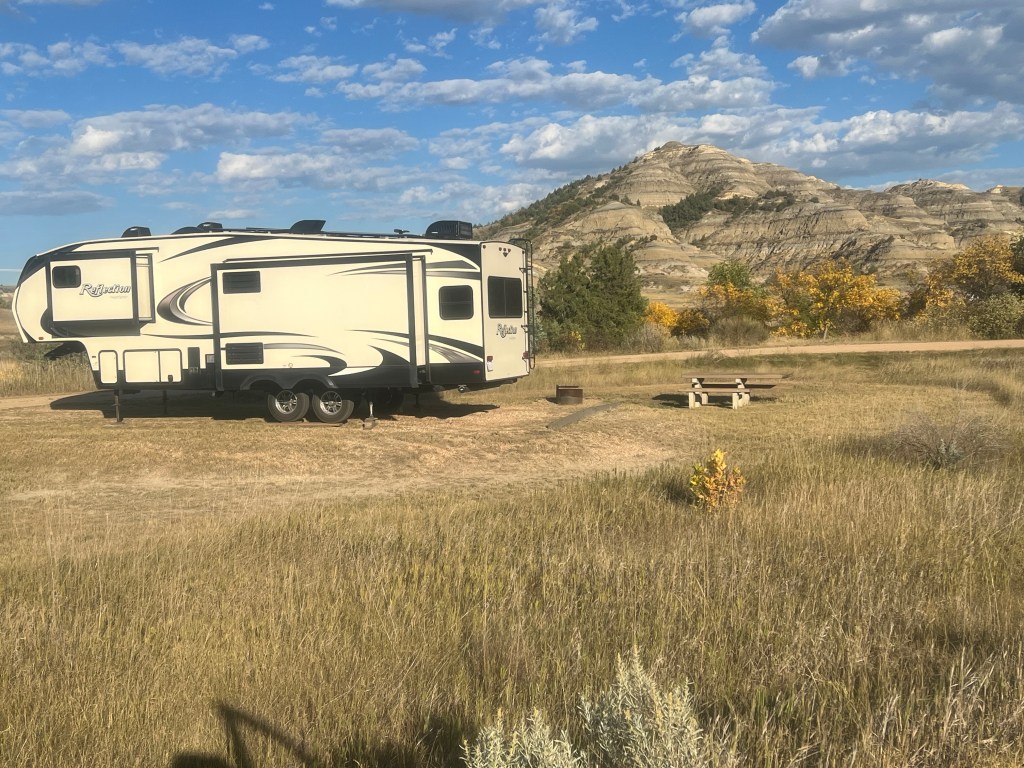
As you can see, we had a nice view out our door. Once we got set up, we decided to head out to the park since it was warm and a clear blue sky (the camper picture was taken later in the day), with a cloudy day forecast for Monday.
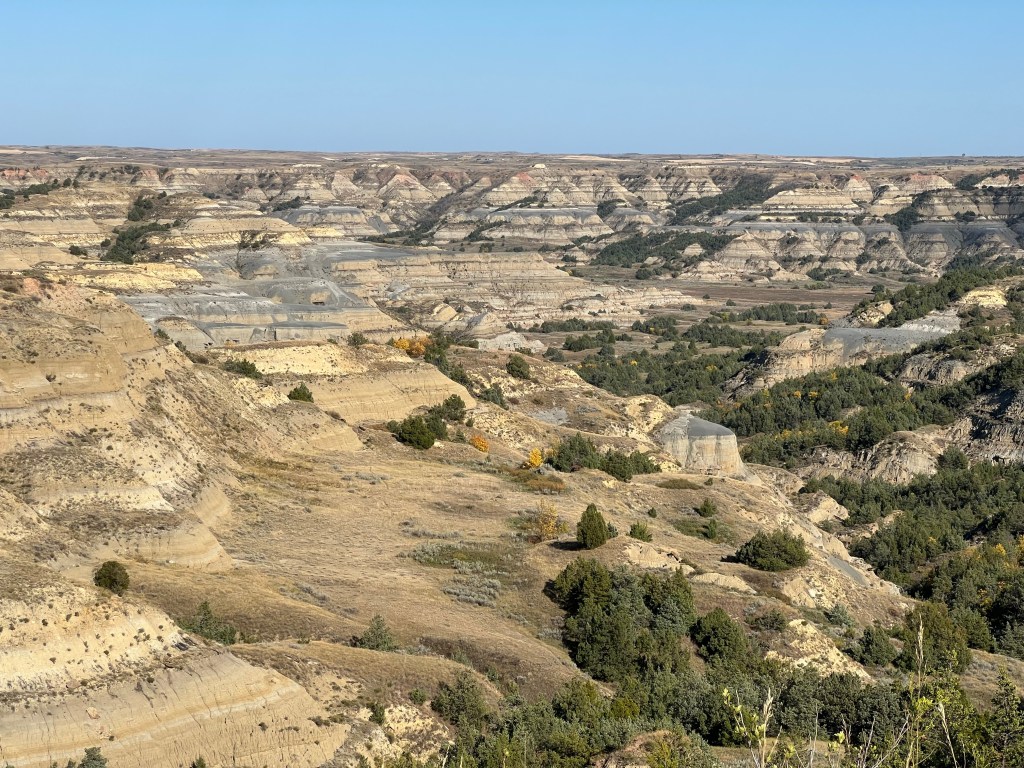
As we drove into the park, we were immediately struck how much more scenic these badlands are than the south unit was.

The scenic drive was only 24 km long and had fewer scenic pullouts.
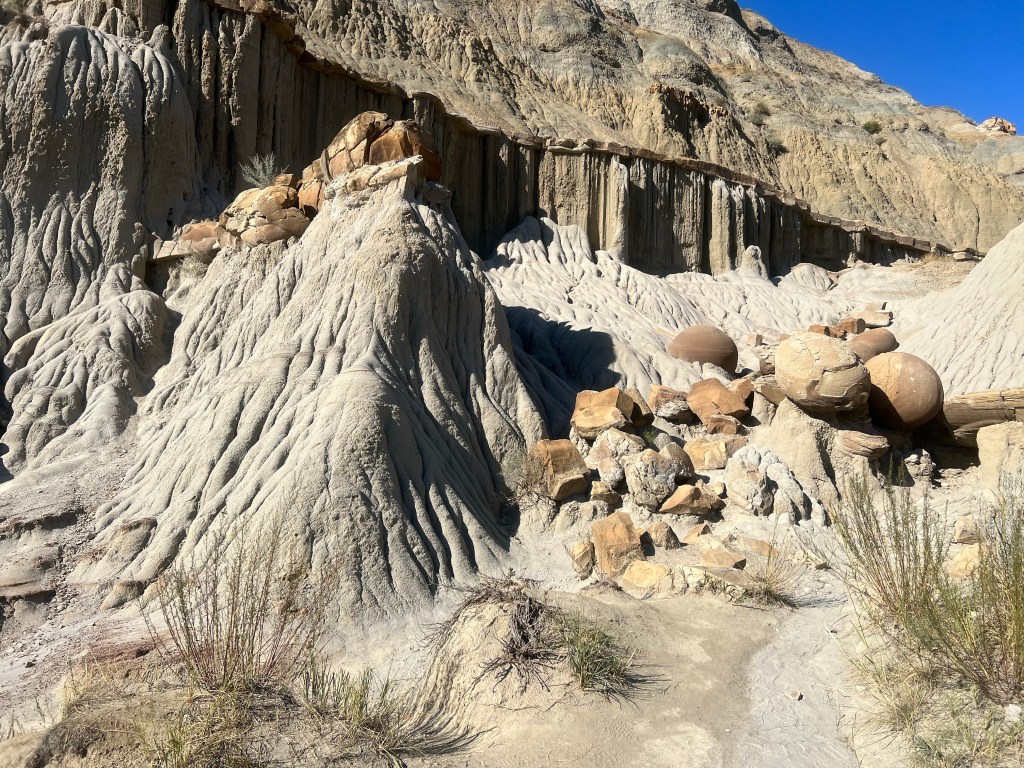
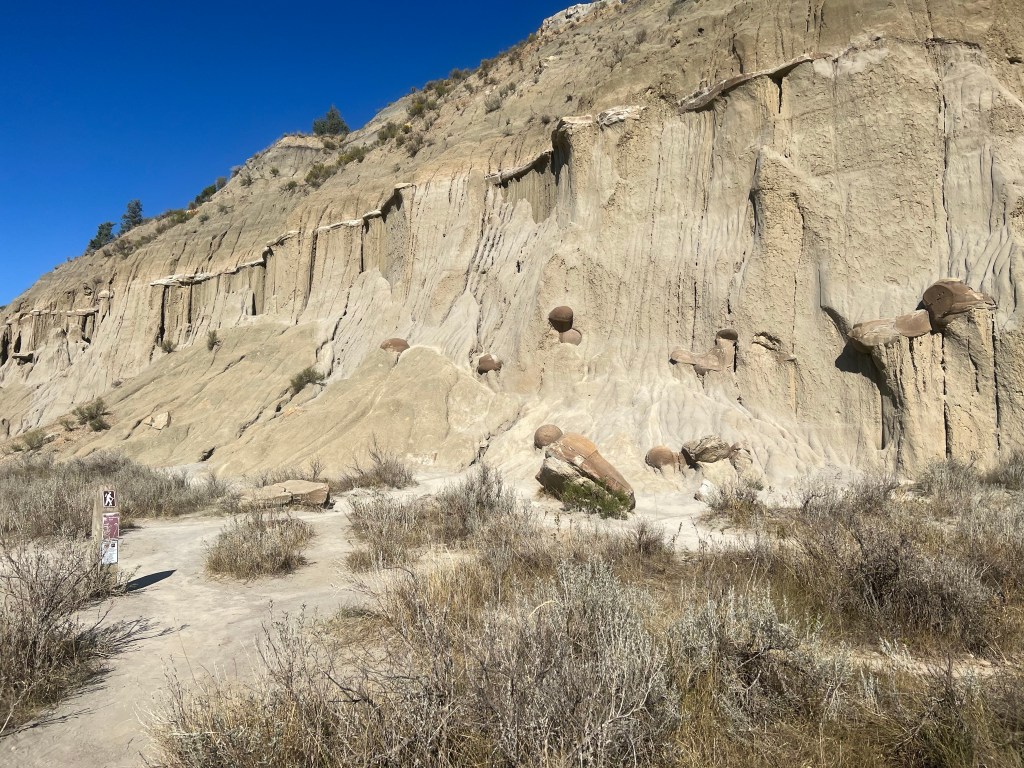
In one section of the drive there was an area of what is called concrete concretions. These are created through mineral deposits, but exactly how, is not certain. You can see them not only in a few piles on the surface, but also partially exposed in the side of the hill.
We also saw another unique formation called bentonitic. In the picture below, bentonitic is the blue-black clay on the surface in some areas. It’s surface is like popcorn, which will flow when wet.
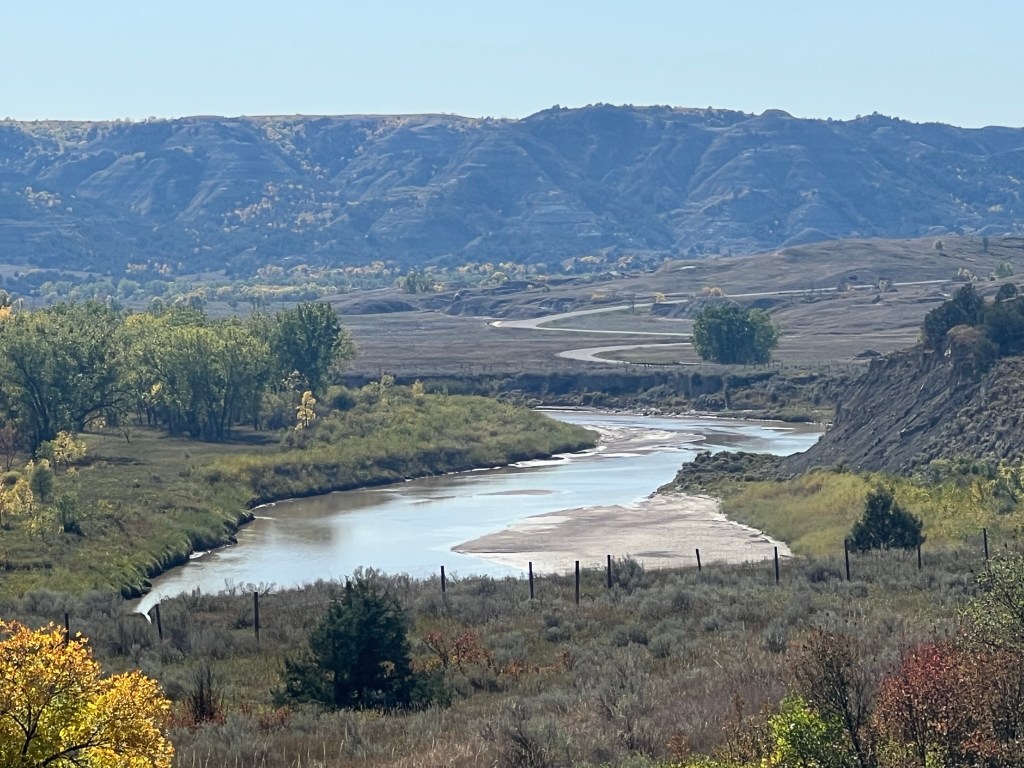
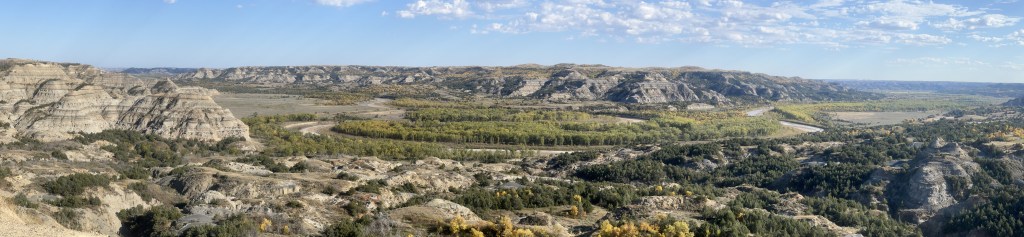
The river valley is starting to show some golds as the leaves of the cottonwood trees are beginning to turn. Since there are more evergreens in this area, the yellow leaves are more scenic.
On our return trip to the main entrance, we saw one last herd of buffalo in the park. We don’t expect to see more since we’ll be outside of national parks Although this herd was crossing the road, it didn’t cause the jam like in the South Unit, since this park was much less travelled.

Tomorrow (Monday) is another travel day, as well as a chance to restock a few more groceries.

 Following Joyce & Paul's Travels in Retirement