
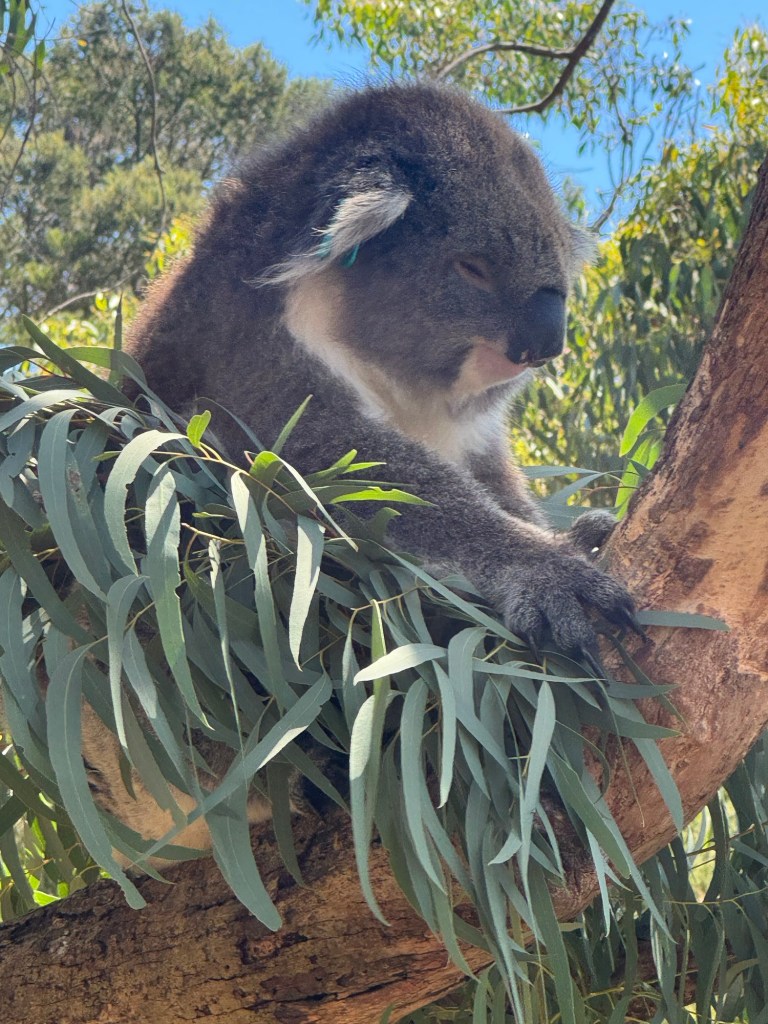
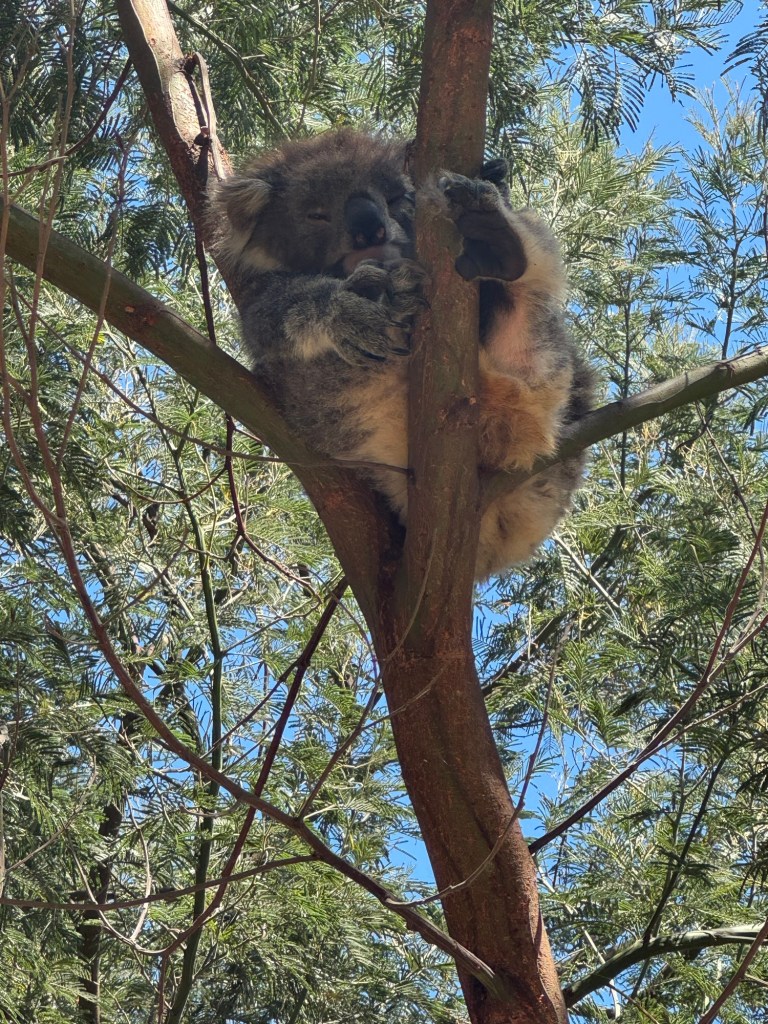
On Monday morning we headed to the Phillip Island Koala Conservation Reserve. Visitors fund the vital research, conservation and education work done there. Staff care for over 1,980 hectares of beaches, bushland and wetland reserves on Phillip Island. We had a brief intro by one of the staff and then headed to the boardwalk to look for koalas. They are divided into two areas. One is for the “retired” koalas who are no longer reproducing but haven’t died yet. The other area is where the younger koalas live and mate.
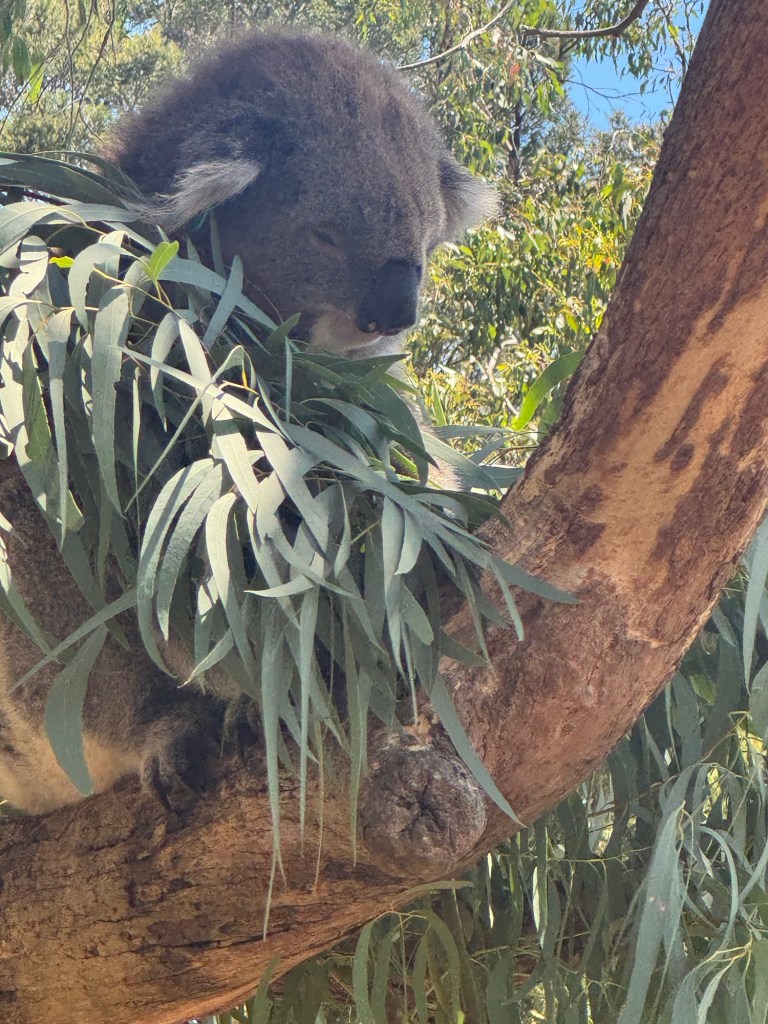
You walk on a raised boardwalk so you are closer to where the koalas are. The park staff go through periodically looking for them and when they find them, they put up a sign pointing to them. Of course, they could move before you go through, but the koala isn’t as active during the day so often the signs are still valid.
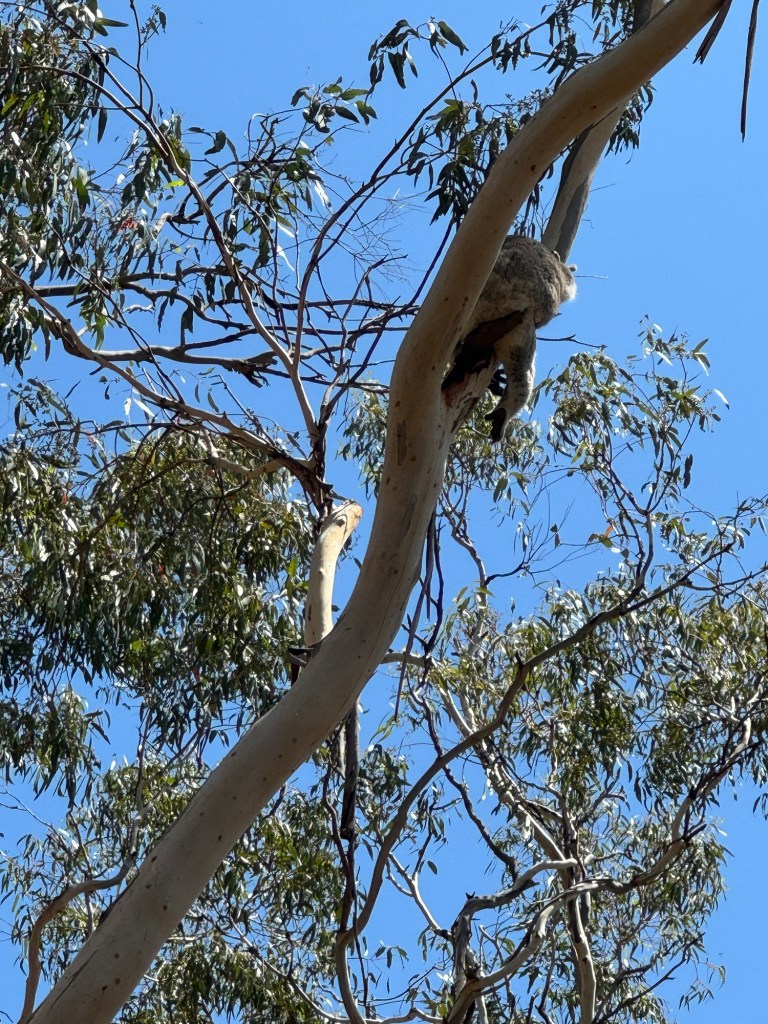

We opted not to take a longer walk through the bird section since it was very hot with lots of sun and we knew there would be more walking that night.
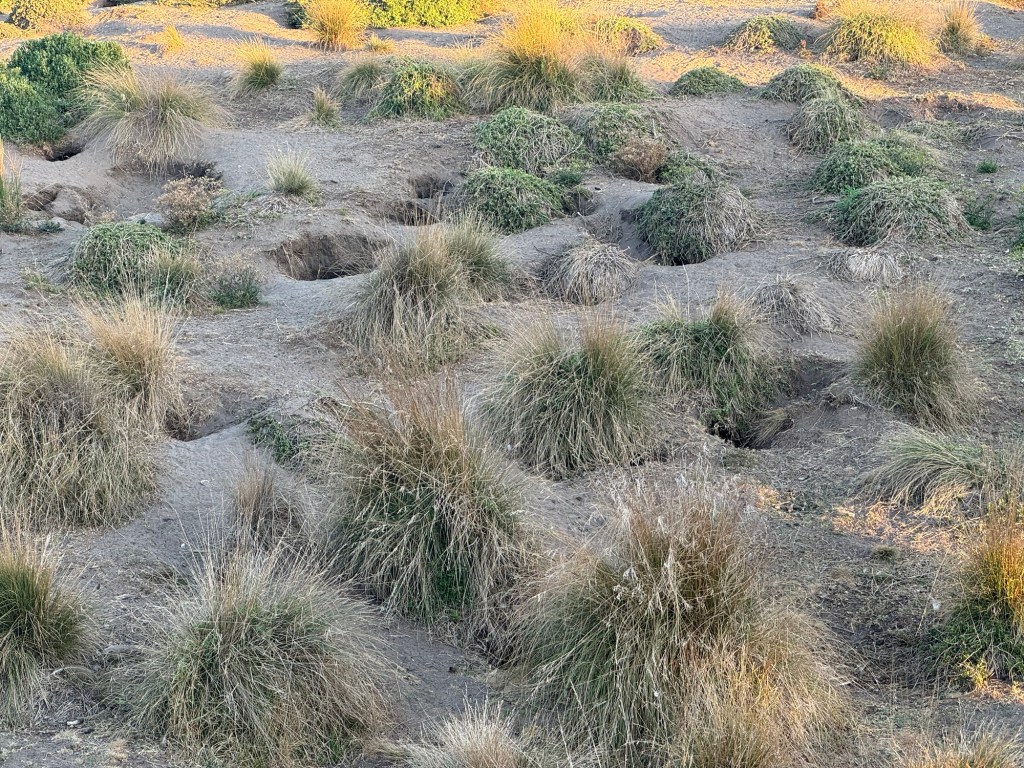
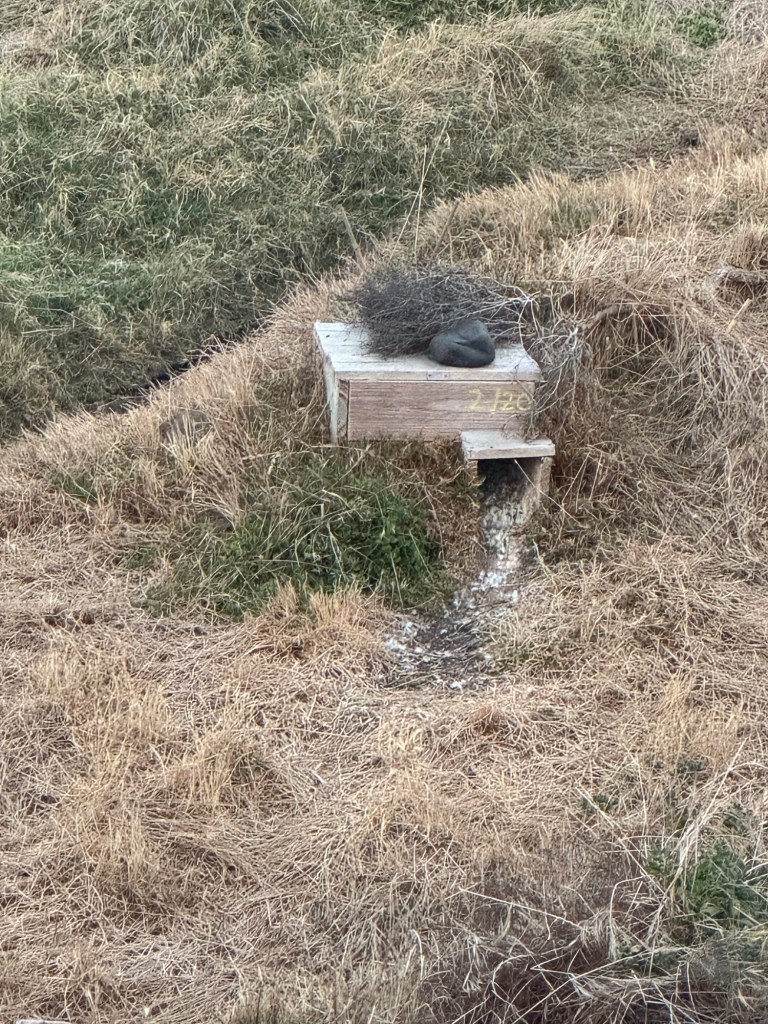
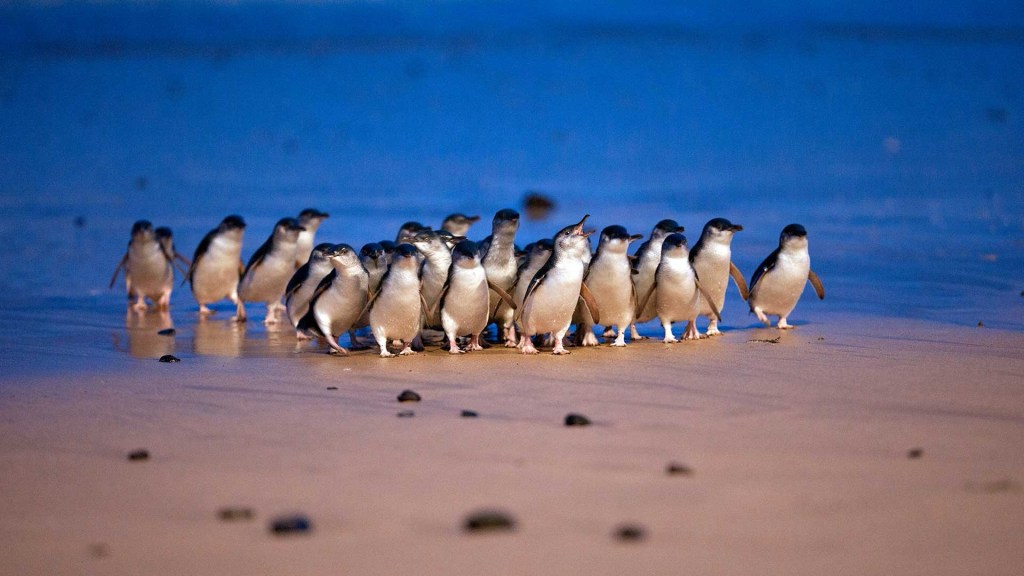
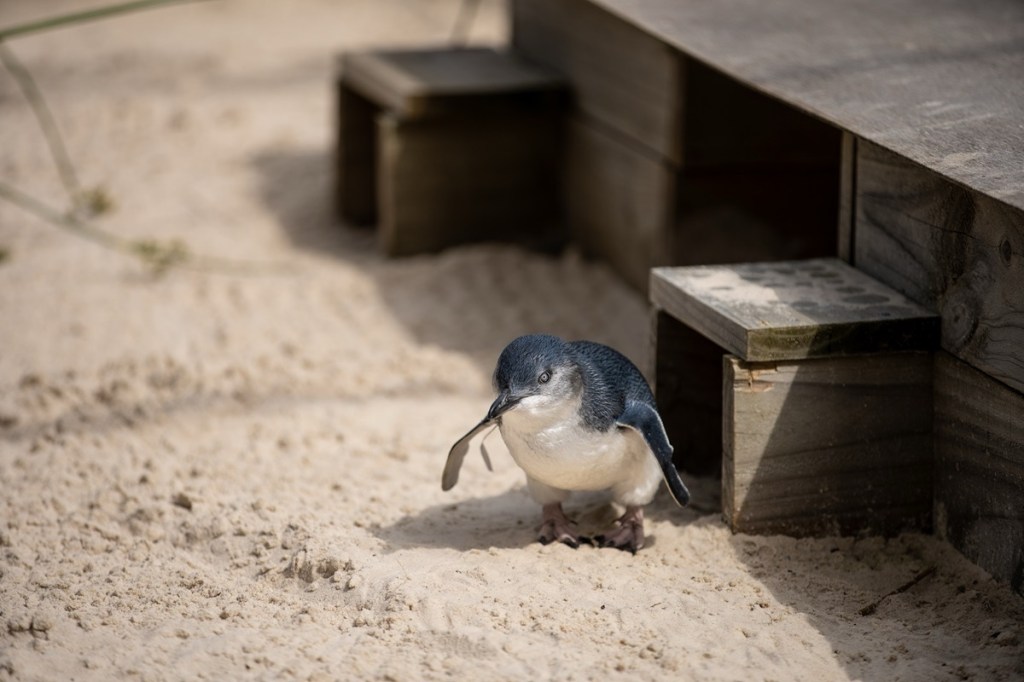
After supper, we headed to the Penguin Parade area. This had been hard for us to get tickets for – normally not once school is back in session which it was. However we were lucky to get some in the premium viewing area which holds about 300 people compared to the regular area which holds 2000! This event attracts over 700,000 visitors per year and is home to the world’s largest colony of little penguins, with approximately 40,000 birds residing on the Summerland Peninsula. Also known as little blue penguins or fairy penguins, these are the smallest penguin species (around 30-33 cm tall) and the only ones with blue-and-white feathers.
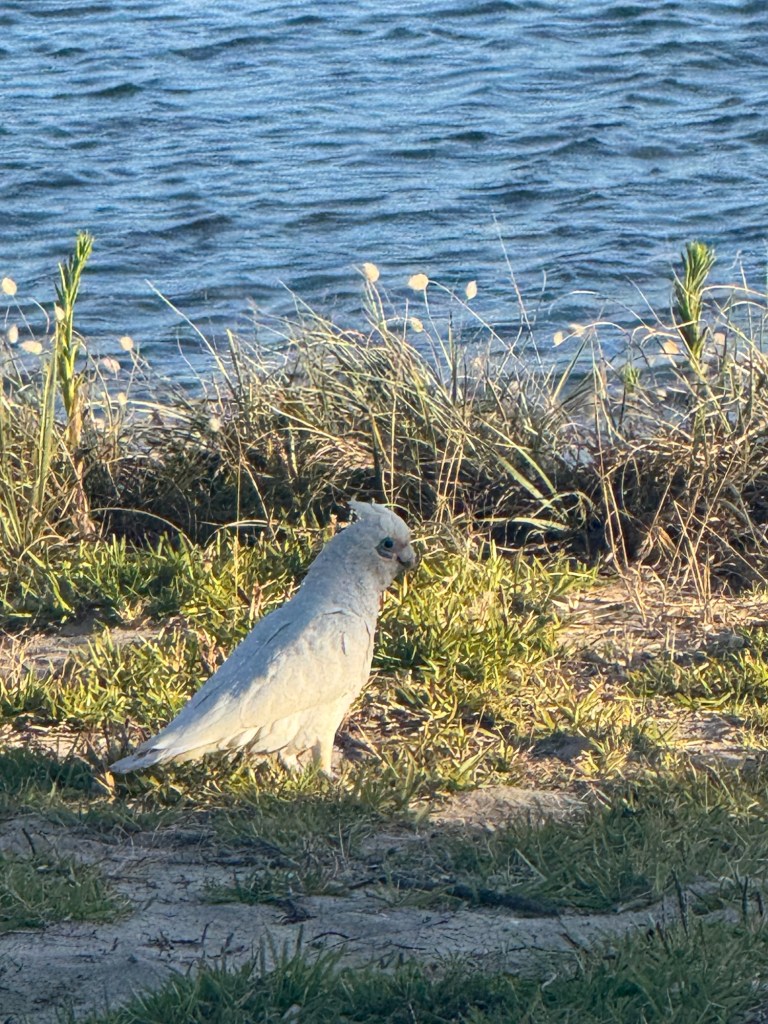
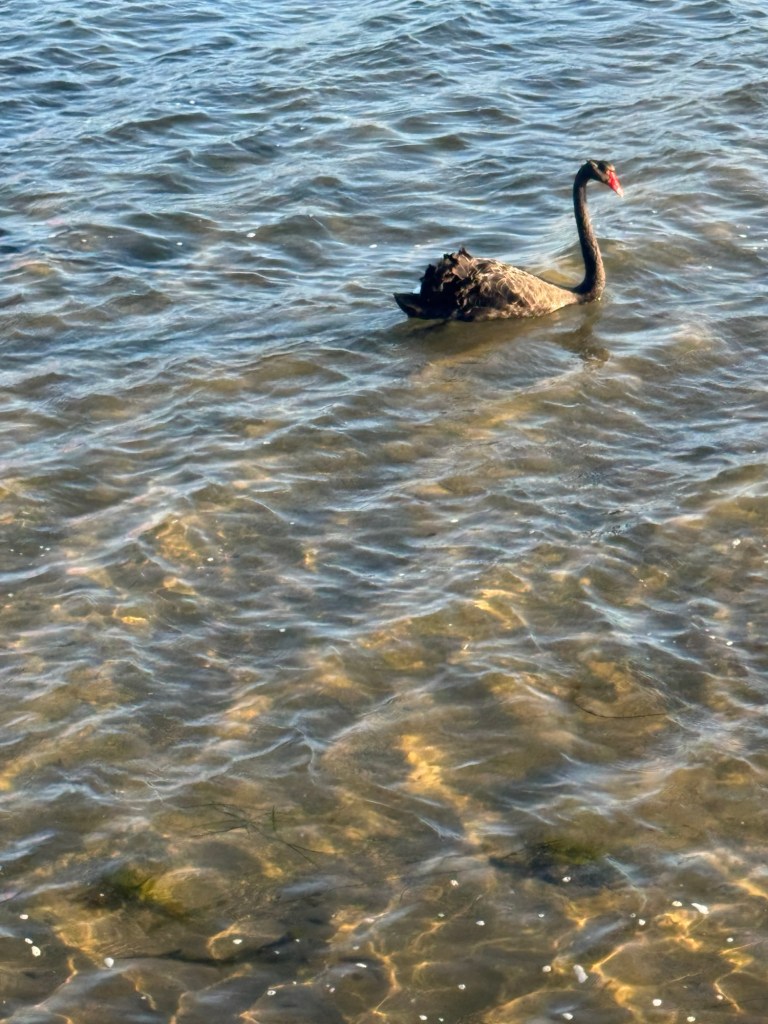
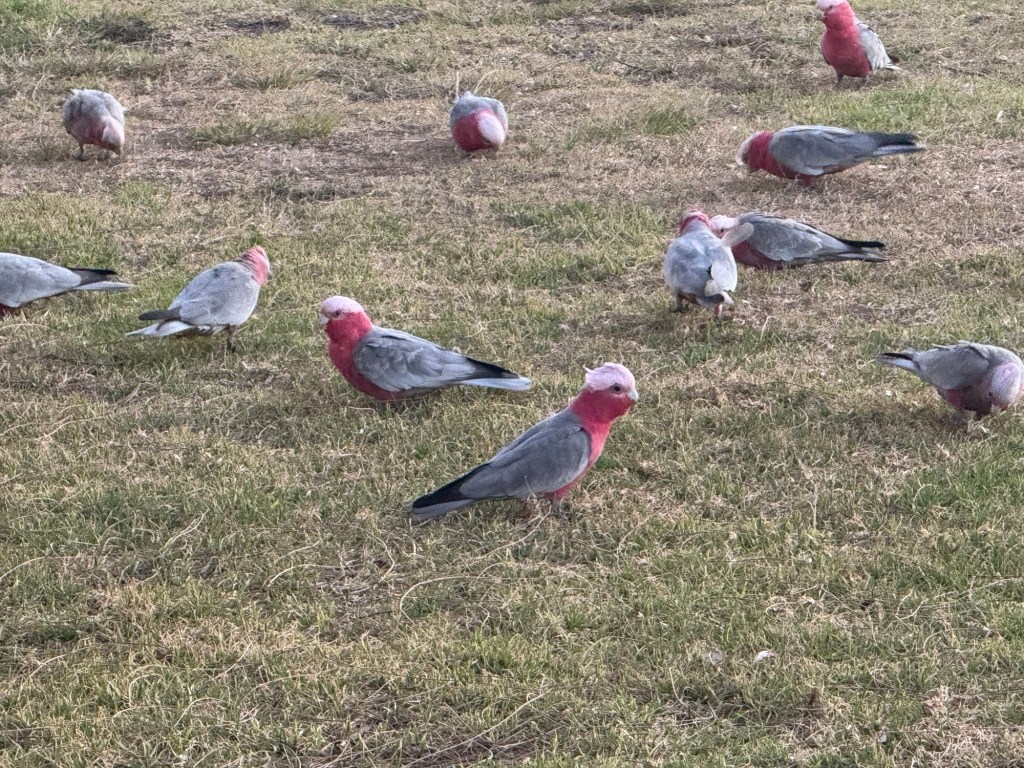
We also saw other wildlife.
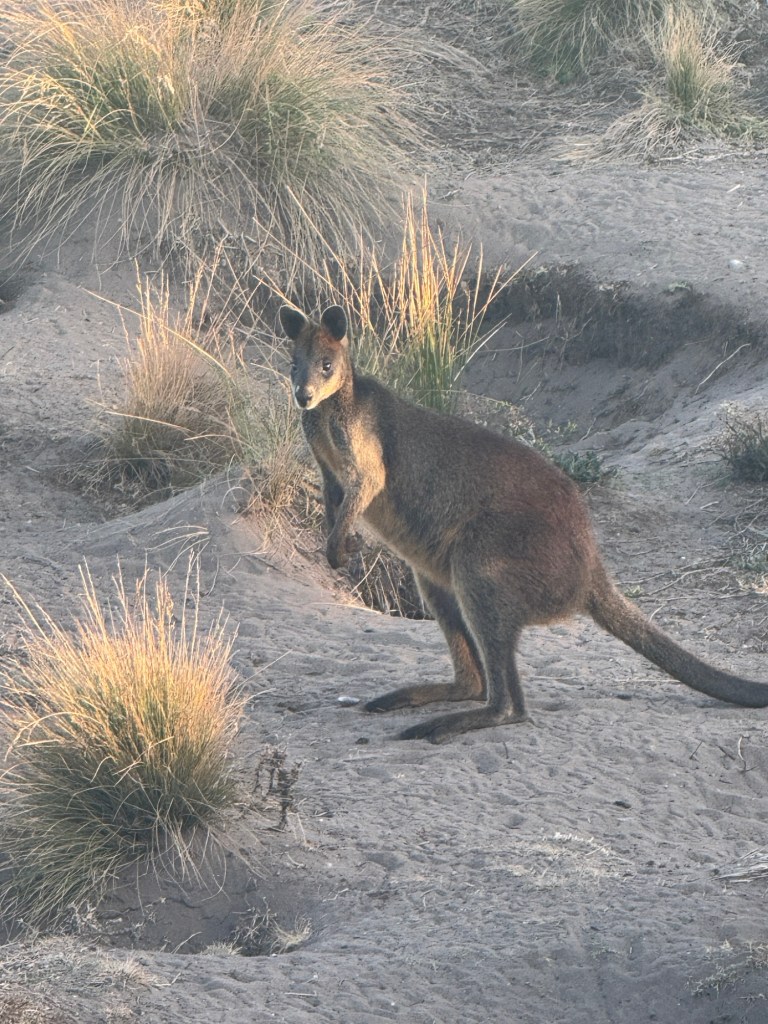
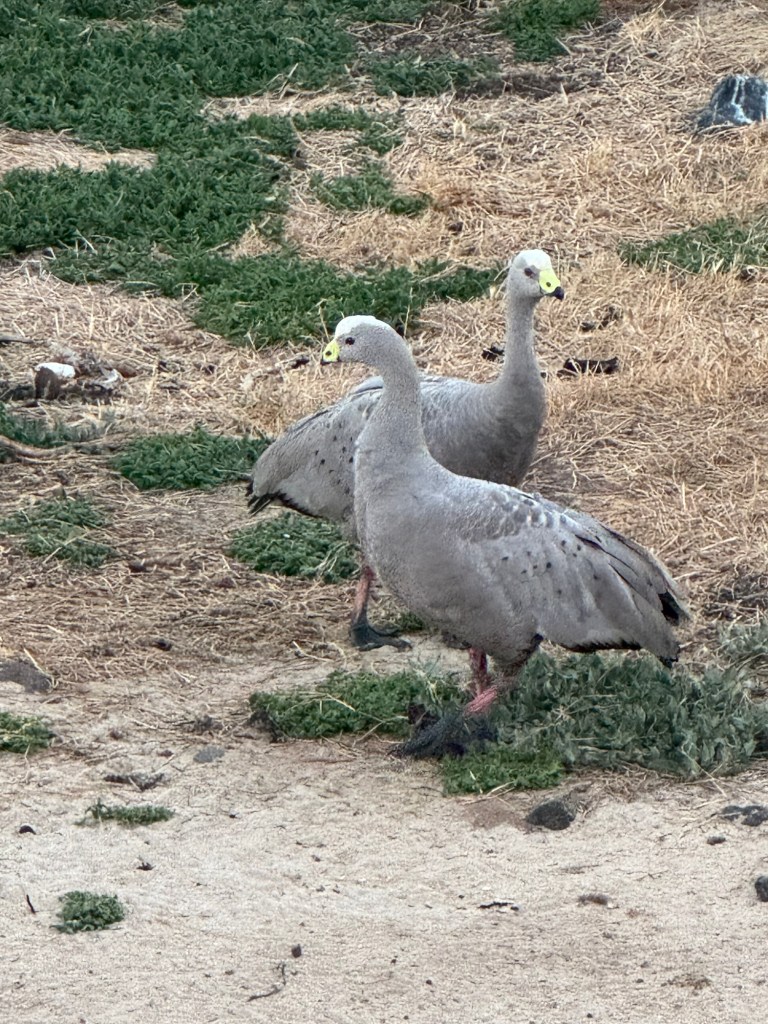
Tomorrow we leave Phillip Island and head to the Great Ocean Road.
 Following Joyce & Paul's Travels in Retirement