
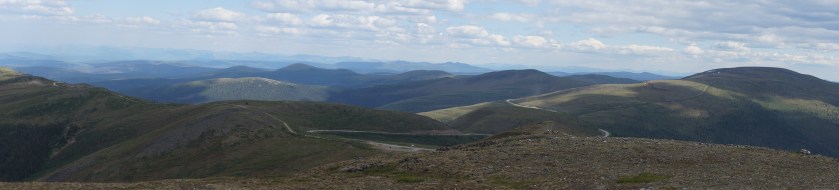
This morning we got up to a sunny morning to head out to what we expect to be a highlight – the “Top of the World” Highway. It will be a slow drive over – it’s gravel a lot of the way and up and down mountain roads. It’s a road that is only open for a few months of the year – sometime late April to the end of September or early October. However, we also expect some nice scenery and the weather is cooperating nicely. We saw some nice mountain ranges in the distance – still too far off for our liking though. We both figure we’ll have to wait until closer to Denali or the St. Elias Range to see the “real” mountains up close.
It was a disappointing day for wildlife again. Our net summary of wildlife is pretty low at this stage of the trip. Paul keeps joking that the guy in charge of opening the cages in the morning must be slacking on the job! However, the day was uneventful for travelling and we reached the “Top of the World” at an elevation of just over 4500′.
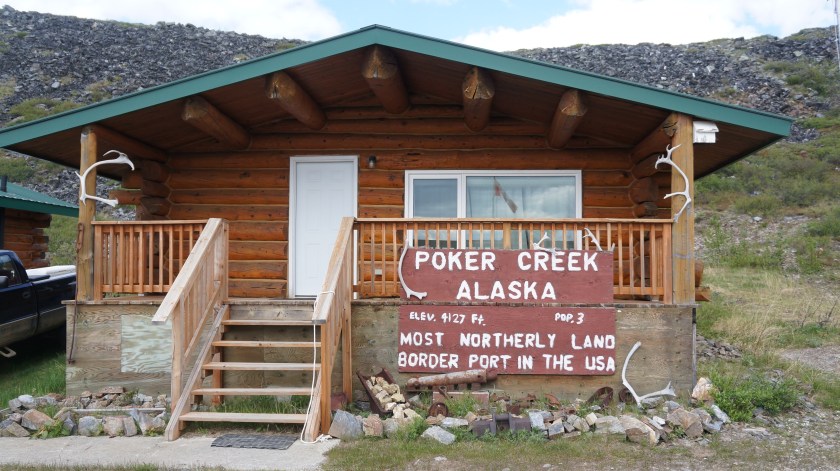
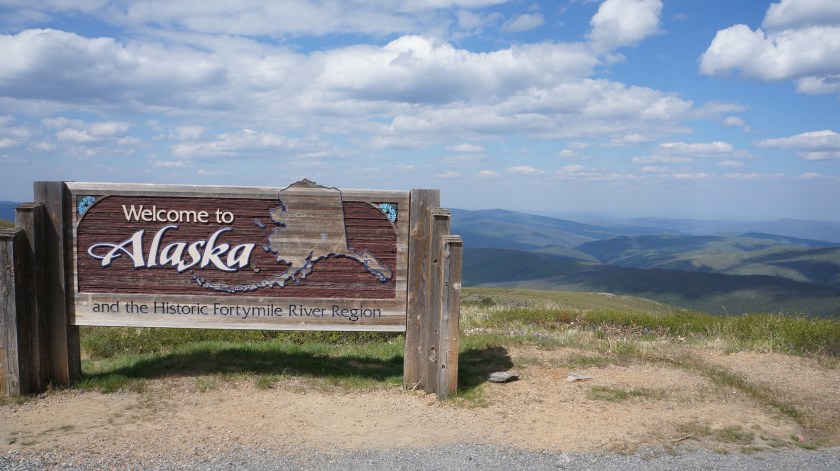
Just past the peak of the highway, we crossed the border into the US, leaving the Yukon behind. We are now officially in ALASKA, nearly 4 weeks after leaving New Hamburg. It is such a small border crossing, the most northerly land border crossing in the US.
We drove a short bit and then pulled into a state run park just before the town of Chicken. We decided to make the stop here since tomorrow is a trip to Eagle, AK and we’ll have a wee bit of back-tracking to do. However, once again, we are in mosquito-ville and no campfire tonight.
Next a side trip to Eagle….
 Following Joyce & Paul's Travels in Retirement